Claude Fable 5.2 Cuts API Rates and Tightens History Checks
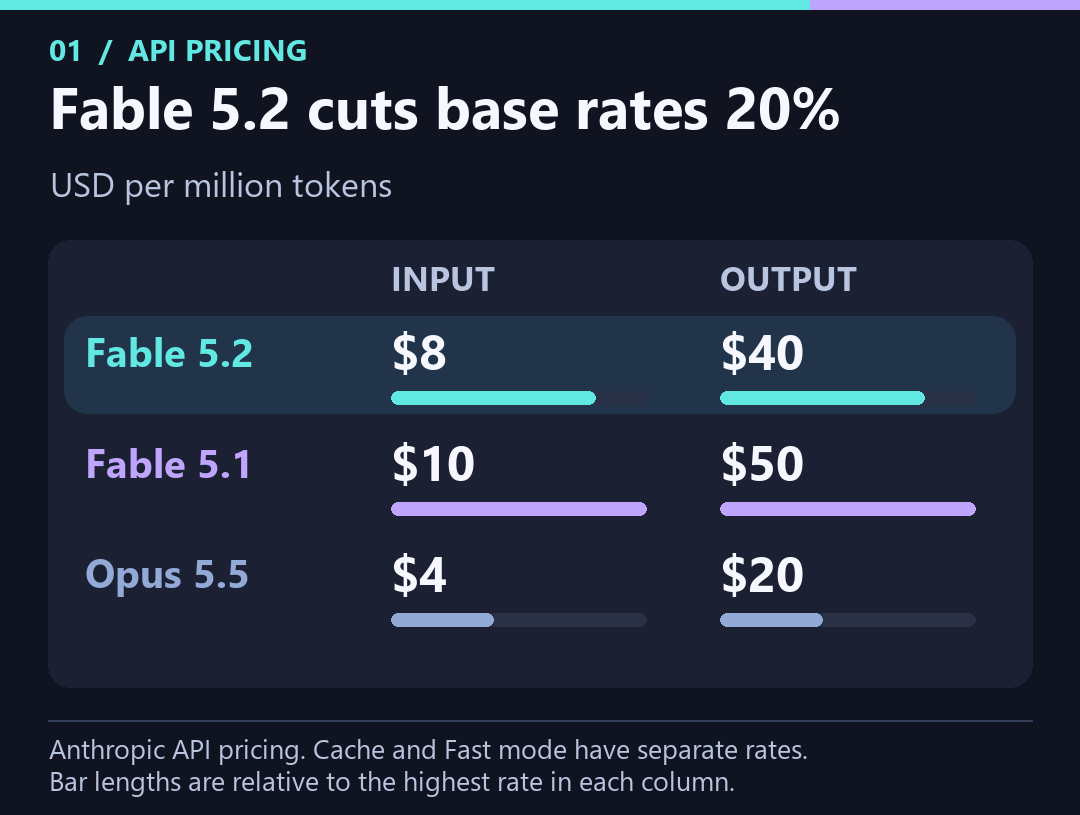
Claude Fable 5.2 launched on November 9, 2026. Anthropic cut its standard API prices by 20% to $8 for input and $40 for output per million tokens. It also tightened a conversation-history check that can turn a previously working integration into an HTTP 400. Those are the two changes I would put in a migration ticket. Launch announcement · Migration guide
What does the 20% price cut buy?
In September, the Fable 5.1 update cut cache-read rates and kept base rates at $10 and $50. This release cuts both base rates and takes cache reads from $0.25 to $0.20 per million tokens. Opus 5.5 already charges $0.20 for cache reads, with standard input and output at $4 and $20. Our Fable 5.1 analysis · Claude API pricing
Take a hypothetical agent run with 80,000 uncached input tokens, 450,000 cache-read tokens across requests, and 20,000 output tokens. At published rates, Fable 5.1 costs about $1.91, Fable 5.2 costs $1.53, and Opus 5.5 costs $0.81. This calculation excludes cache writes, external tool fees and retries. Each model receives the same token counts to isolate the effect of prices.
| Model | Uncached input | Cache reads | Output | Total |
|---|---|---|---|---|
| Fable 5.1 | $0.800 | $0.1125 | $1.000 | $1.9125 |
| Fable 5.2 | $0.640 | $0.090 | $0.800 | $1.530 |
| Opus 5.5 | $0.320 | $0.090 | $0.400 | $0.810 |
For 100 such tasks, sending everything to Fable costs $153. An Opus-first queue costs $81 plus $1.53 for each task rerun in Fable. The second route costs less if at most 47 tasks need a rerun. At 48 reruns, it costs $154.44. That threshold only describes spend in this example. To compare the routes in production, also measure acceptance after the rerun and the time spent waiting for both attempts.
Anthropic reports up to 30% faster output generation on standard 5.2 than on 5.1. Optional Fast mode reaches up to 2.5× generation speed at $16 input and $80 output per million tokens. Total job duration also includes the time spent in tools, so those generation figures tell you only part of the latency story. Fast mode and API changes
How much did coding and research improve?
Anthropic’s launch table puts Fable 5.2 at 49.1% on FrontierCode 2.0 at xhigh, up from 32.4% for Fable 5.1 at the same effort. Opus 5.5 scored 45.5% at max. FrontierCode 2.0 uses 132 maintainer-authored tasks and weighted rubrics, so the percentage expresses rubric performance. Launch benchmark table · Cognition’s scoring method
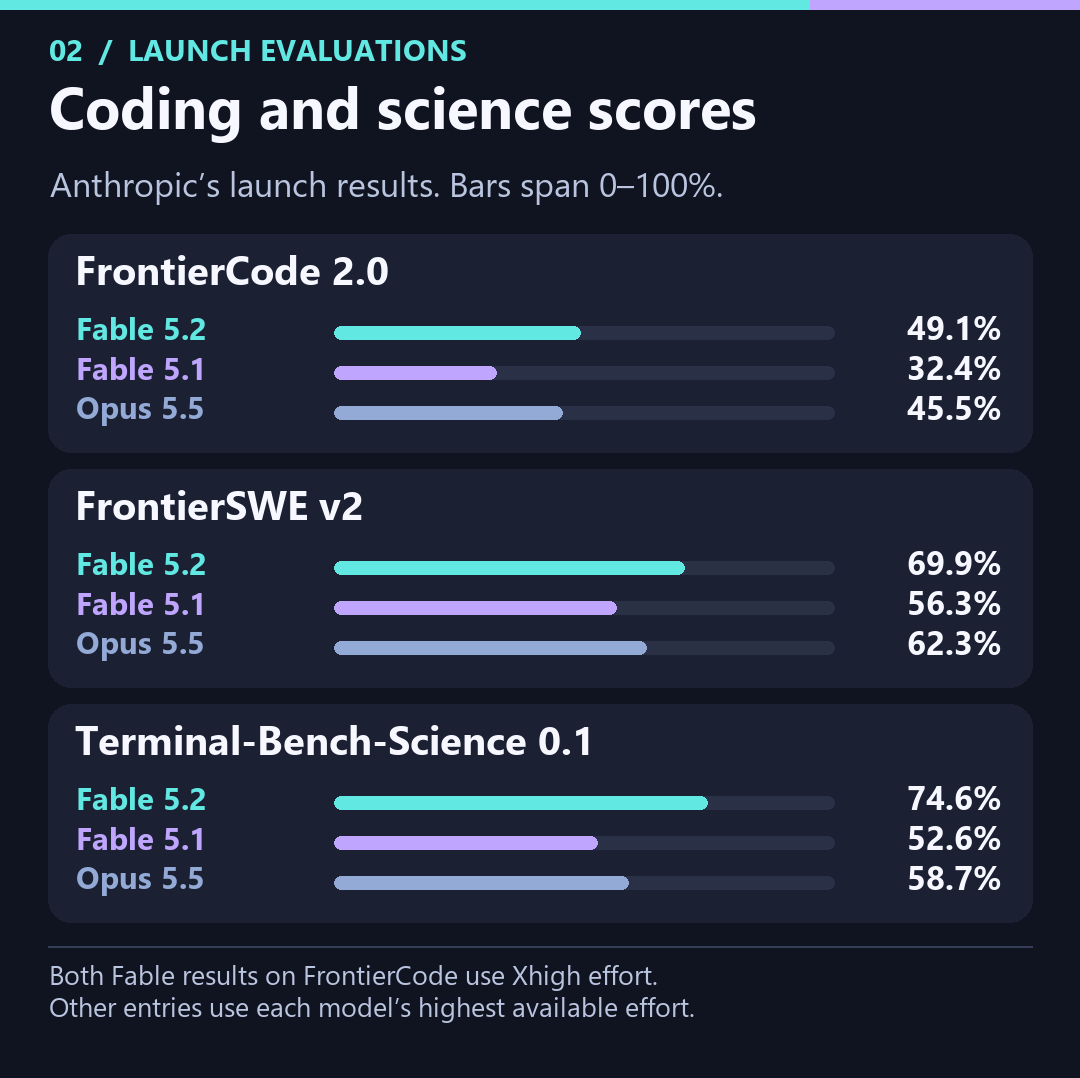
The release’s most interesting cost result is a separate FrontierCode run. Fable 5.2 at high scored 45.3%, close to Opus 5.5 at max at 45.5%, and Anthropic reported roughly half the cost per attempt. That can coexist with the 2× base token price. Each effort setting can consume a different number of tokens and make a different sequence of tool calls. The same-token example above holds those factors fixed. Anthropic’s effort and cost comparison
The ranking also depends on the task and the grader. Fable 5.2 scored 51.4% on AutomationBench, behind the 53.9% listed for Gemini 4 Carbon. On AA-Briefcase v1.1, Fable beat Opus 5.5 on the rubric (66.1% to 61.2%), while Opus led on Elo (1800 to 1785). The launch comparisons include model-specific effort settings. We used the published results and did not run the benchmarks. Results and test notes
Why can an old API conversation return HTTP 400?
Fable’s preserved thinking blocks carry a signature tied to what came before them, including the system instructions, tools and conversation history. Fable 5.2 checks that prefix on every account. If your application rewrites an earlier message or changes an earlier tool definition and then sends back a thinking block from the original prefix, the API can reject the request. New conversations and straight append-only turns avoid this specific mismatch. Preserved thinking migration notes
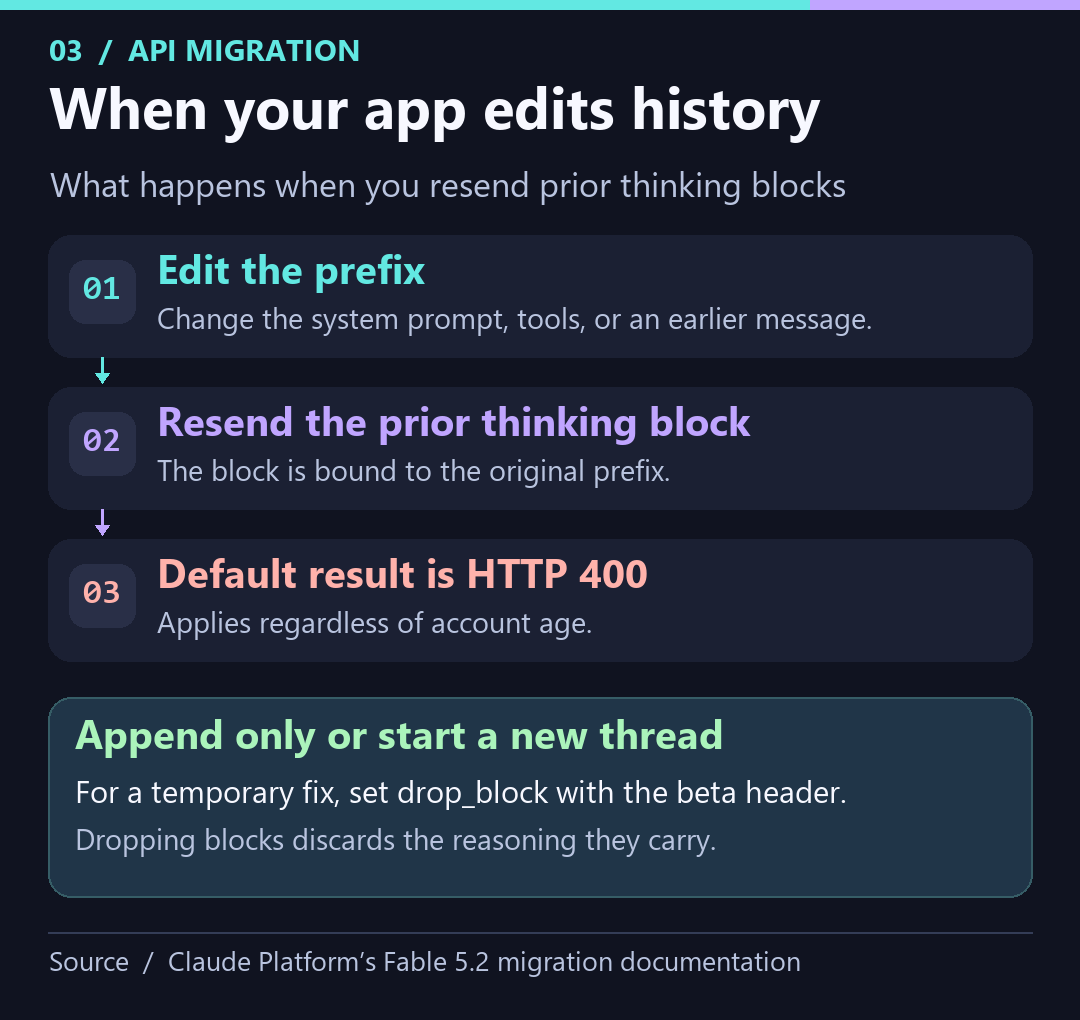
For a rollout, replay one ordinary tool-use turn and one turn with edited history. Keep valid blocks intact on continuation. If a workflow needs to reconstruct its history, start a new thread from the intended context. Anthropic also documents a temporary beta drop_block setting, which discards mismatched blocks and may increase output tokens. If you use computer use, replace computer_20251124 with computer_toolset_20260801. If you use an advisor with Fable 5.2 as executor, choose Fable 5.2 or Mythos 5.2 as the advisor when starting the session. Breaking changes and rollout guidance
Who can use Fable 5.2 and Mythos 5.2?
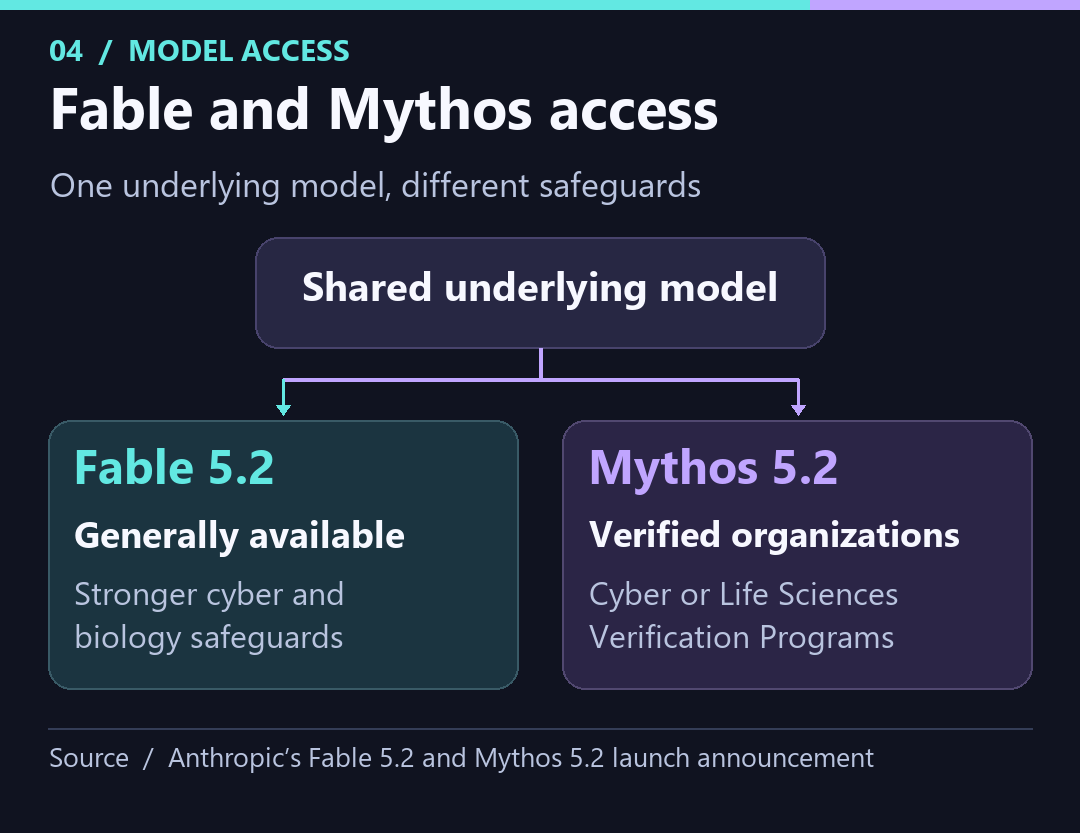
Anthropic makes Fable 5.2 generally available through the Claude API and offers it on eligible Claude plans. The model docs also list Claude Platform on AWS, Google Cloud deployments and Microsoft Foundry. Mythos 5.2 shares the underlying model and standard price. It gives verified organizations access under different cybersecurity and biology safeguards. The launch promotion lets Pro and standard Team seats spend up to 50% of their weekly limit on Fable until November 16 at 11:59 p.m. Pacific time (November 17 at 4:59 p.m. in Korea). Usage credits apply after that allowance or the end of the promotion when enabled. Model availability · Claude launch offers
What did the hardware demo actually build?
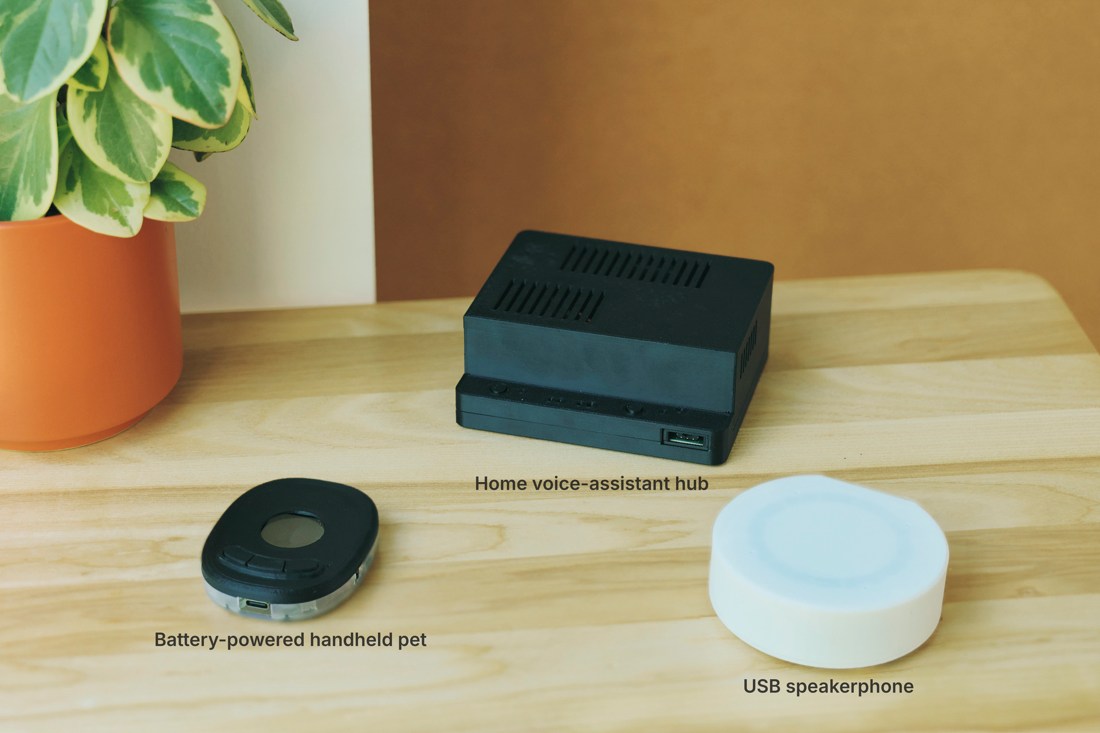
In an Anthropic and Diode Computers demonstration, Fable 5.2 drew schematics, routed four-layer boards, designed enclosures and wrote firmware for three devices. Diode engineers manufactured, assembled and tested the prototypes. Anthropic reports that all three worked without circuitry changes. The project left electrical validation, antenna tuning, thermal tests and certification outside its scope, and Anthropic disclosed a commercial relationship with Diode. Electronics demonstration and limitations
Claude Fable 5.2 FAQ
What is the API model ID?
Use claude-fable-5-2 on the Claude API. The API supports a 1M-token context window and up to 128K output tokens. API specifications
Does Fast mode make the whole agent run 2.5× faster?
The advertised figure covers output generation. Time spent waiting on repositories, browsers and other tools still counts toward the run. Fast mode documentation
Which number should I track during a pilot?
Track cost per accepted result at a stated effort level. Log uncached input, cache reads, cache writes, output, reruns and elapsed time separately. That lets you see when the cheaper first attempt pays off and when routing directly to Fable saves an extra pass.