DeepSeek V4 Flash lost me before I even tried it — the benchmarks are ridiculous
DeepSeek V4 Flash lost me before I even tried it —
the benchmarks are ridiculous
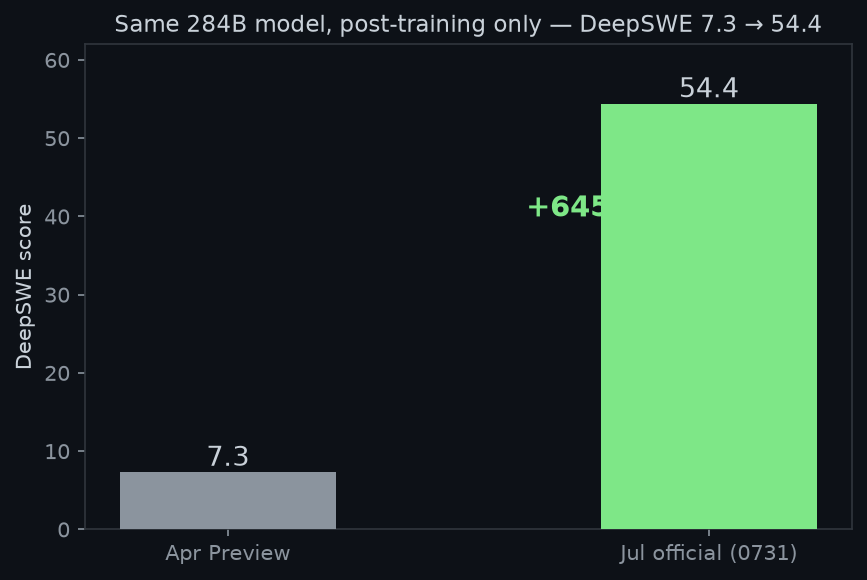
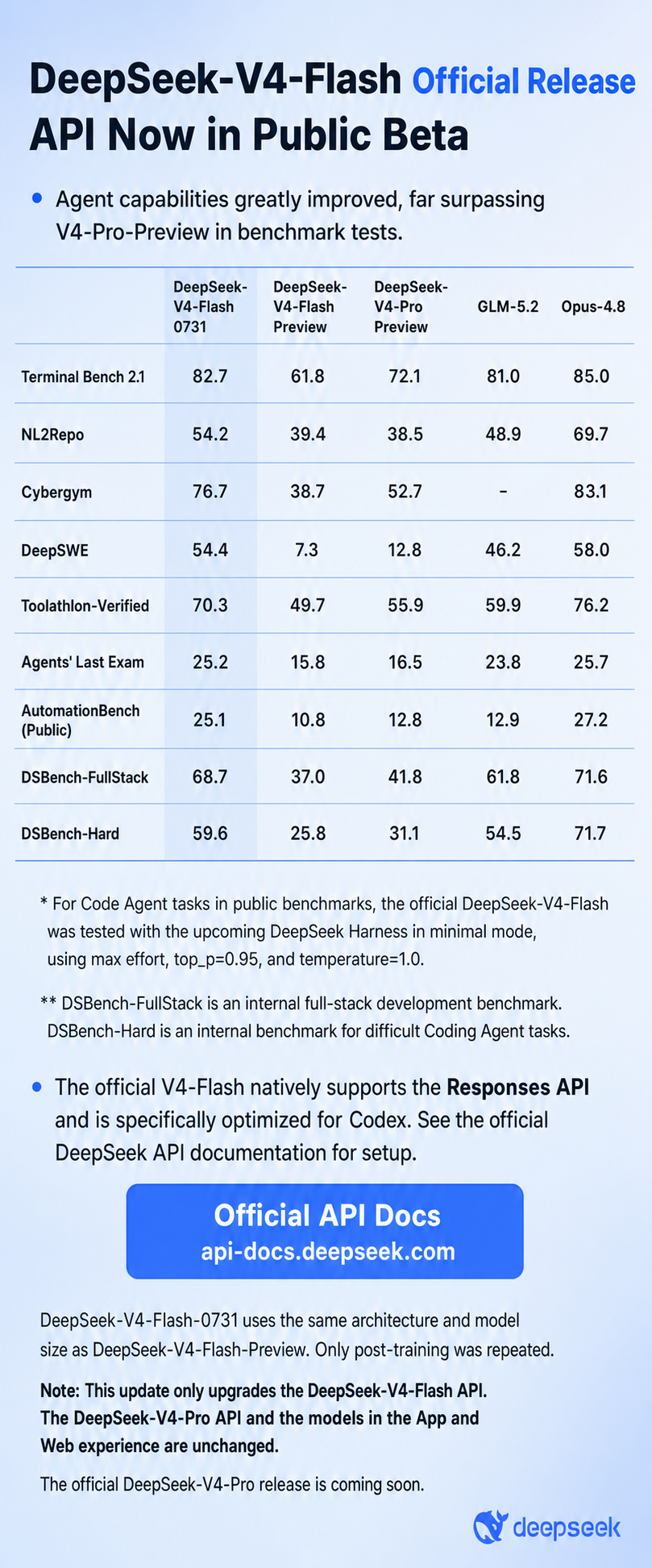
DeepSeek dropped the official V4 Flash on July 31, and reading the changelog I actually stopped for a second. A small model beating their own flagship on all 9 benchmarks?
Usually when people say "the light model caught up to the flagship," it wins one or two benches and loses the rest. This one won 9 out of 9. And not by changing the architecture — just redoing the post-training. In other words: same 284B model, different training recipe, and the agent performance jumped.
So what actually came out
The model is deepseek-v4-flash (0731 checkpoint). Specs:
· Context: 1M tokens / up to 384K output
· Concurrent requests: 2,500 (Pro is 500)
· Thinking mode ON by default (can be disabled)
· Native Responses API → plugs into Codex directly
· No weights on HuggingFace yet — API only
Side note: the old deepseek-chat / deepseek-reasoner aliases died on July 24. If you're still on those, you're probably already getting errors.
Benchmarks — take them with a grain of salt
Here are the numbers. But all of this was measured by DeepSeek on their own harness — zero third-party reproductions so far. Treat it as a "direction," not a "confirmed ranking."
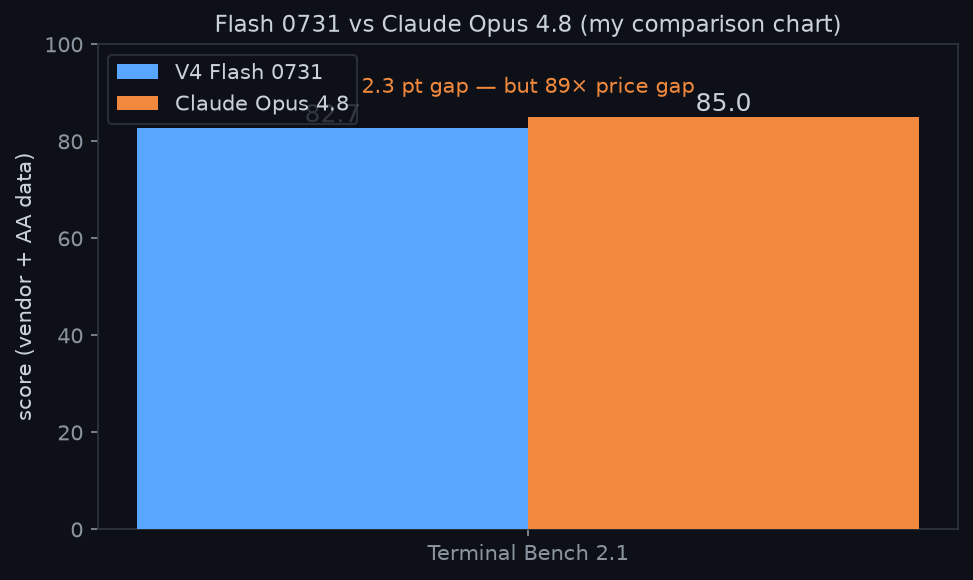
Two numbers caught my eye personally:
Price — this is the real main event
Honestly, the benchmarks were a "huh, okay." The pricing is a different story. Per 1M tokens:
V4 Pro: input $0.435 / output $0.87 (3.1× Flash)
GPT-5.6 Luna: input $0.20 / output $1.20
Gemini 3.1 Pro: input $2.00 / output $12.00
Claude Opus 5: input $5.00 / output $25.00 ← 89× Flash
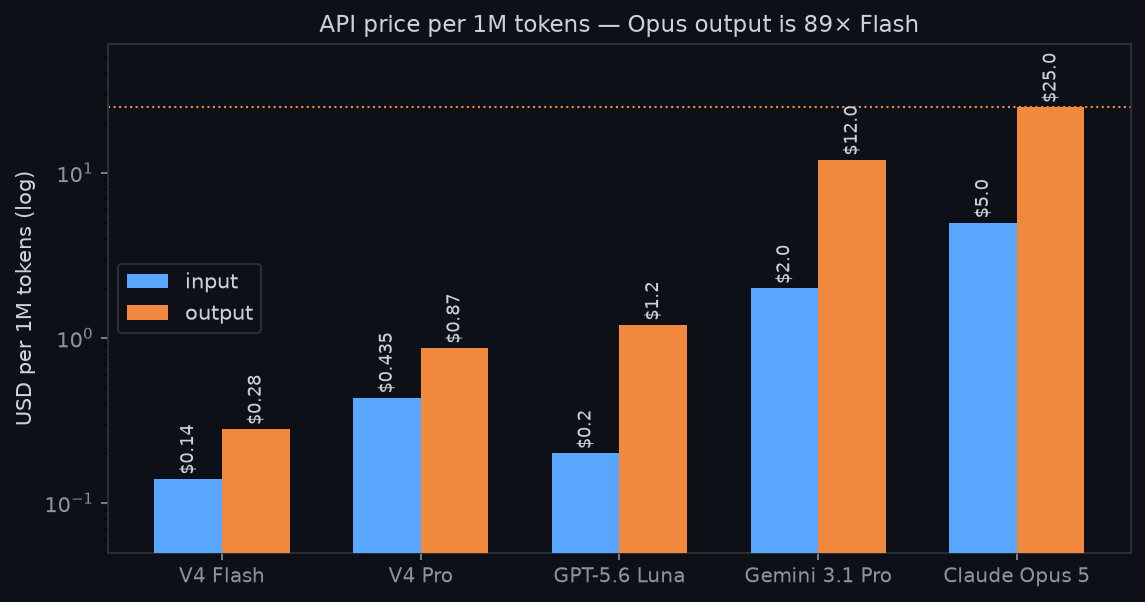
What does a cache hit of $0.0028 mean? Repeated prefixes (like your system prompt) get a 98% discount. If your workload keeps reusing the same context — agent loops, for example — your effective input cost approaches zero.
※ Peak-time 2× surcharge (Beijing 09–12 and 14–18) was announced but the start date is TBD. Prices above are current.
Codex integration — for real?
This one surprised me: native Responses API support. Not through an OpenAI-compatible shim — directly. Codex CLI, ChatGPT desktop, and the VS Code extension all hook up with a single config line.
Right now, Flash is the only DeepSeek model with official Codex support. Pro was supposed to follow in early August, but no news yet.
Before you get excited, a few things
Conclusion
If you run agent or coding workloads and want to cut API costs, this is absolutely worth a trial right now. Especially if you already use Codex — it's one config line.
That said, declaring it an "Opus replacement" off vendor benchmarks alone is premature. When third-party verification lands, I'll post again. For now, the accurate phrasing is probably: "a candidate has appeared that performs absurdly well for the price."
Related on this blog: DeepSeek adding vision to Flash · the V4 Flash vision build
Open Source Factory · opensourcefactory1.blogspot.com
Comments
Post a Comment