Qwen3.8-27B: 27B Dense, Vision Included, Apache-2.0
Qwen3.8-27B: 27B Dense, Vision Included, Apache-2.0
Qwen shipped the giant first, a 2.4-trillion-parameter MoE with 95B active, and I said at the time the model I actually wanted was the small one. It just landed. Qwen3.8-27B is live on Hugging Face, ungated, under a plain Apache-2.0 license, and it's a 27B dense model that can see.
You're getting 27 billion dense parameters, native image and video understanding, 262K context that stretches to a million, and benchmark jumps over the last Qwen that aren't small. DeepSWE 1.1 went from 13.3 to 42.2. Computer use went from 63.9 to 84.3. All of it is vendor-reported, and the weights are hours old, so nobody has independently confirmed a single number yet.
What it actually is
Twenty-seven billion dense parameters means all 27 billion fire on every token, no sparse experts. On top of that it's a native vision-language model, so it reads images and video, not just text. The architecture is the hybrid Qwen3.5 foundation: a mix of Gated DeltaNet linear-attention blocks and gated attention blocks, with multi-token prediction on top.
Before any benchmark, the license is the thing that stands out. Plain Apache-2.0, no custom restrictions, no revenue caps, nothing you'd need a lawyer for. It's also ungated. The weights are downloadable right now, eighteen safetensors shards, no approval form.
The runtimes Qwen lists are Transformers, vLLM, SGLang, and TokenSpeed. Note what's not on that list yet: llama.cpp. More on that in a minute.
The jump from Qwen3.6-27B
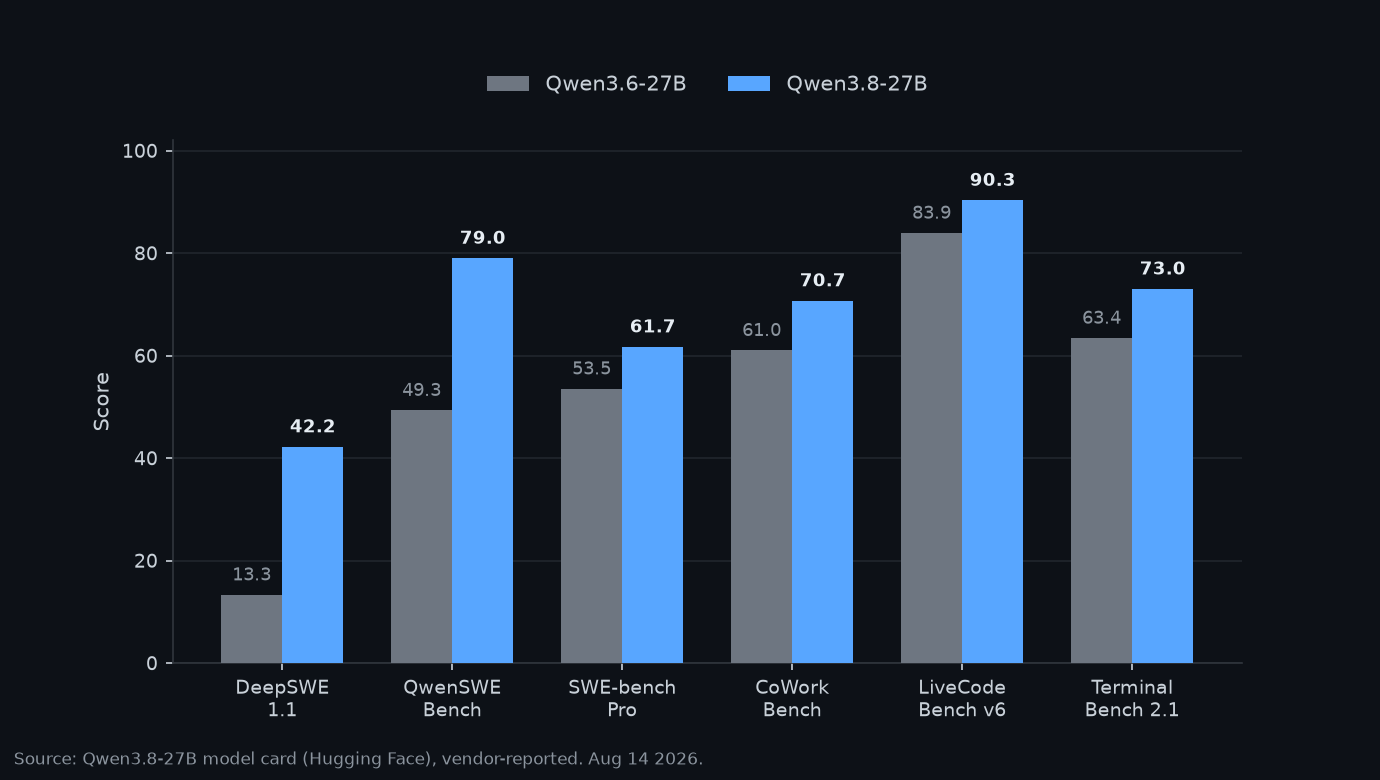
Qwen3.6-27B was already one of the local crowd's favorite coding models. The new one jumps it across the board. DeepSWE 1.1 going from 13.3 to 42.2 is the headline, roughly a threefold jump on a benchmark that measures real multi-step software engineering. QwenSWEBench went from 49.3 to 79.0. LiveCodeBench v6 lands at 90.3.
These are Qwen's own numbers with their own harnesses, so read them as direction rather than gospel. The direction is consistent though: everything moved up, and a couple of things moved up a lot.
The part nobody had at 27B: vision and agentic work
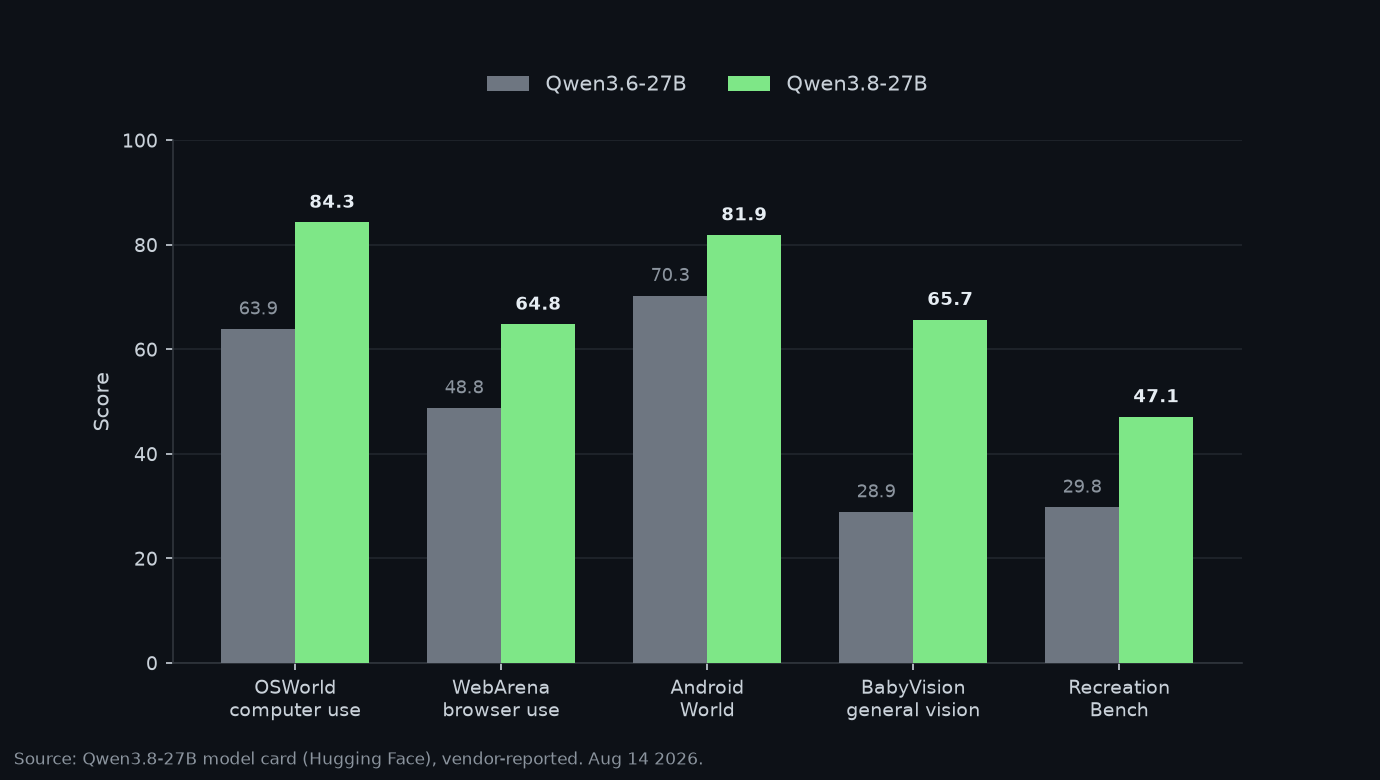
This is what the "intelligence density" tagline is pointing at. Qwen3.6-27B basically couldn't see, 28.9 on BabyVision, and its computer-use score was 63.9. The new model jumps those to 65.7 and 84.3. On OSWorld, that 84.3 from a 27B dense model beats the Opus 4.6 Max column in Qwen's own table, which sits at 72.7. AndroidWorld is the same story, 81.9 versus 62.0.
Translation: a model you can run on one consumer GPU is now doing computer use, browser use, and mobile use at flagship-ish levels. That used to be the thing that required a 2.4T monster. It's the density pitch made concrete, and for once the tagline has a number behind it.
Can you run it?
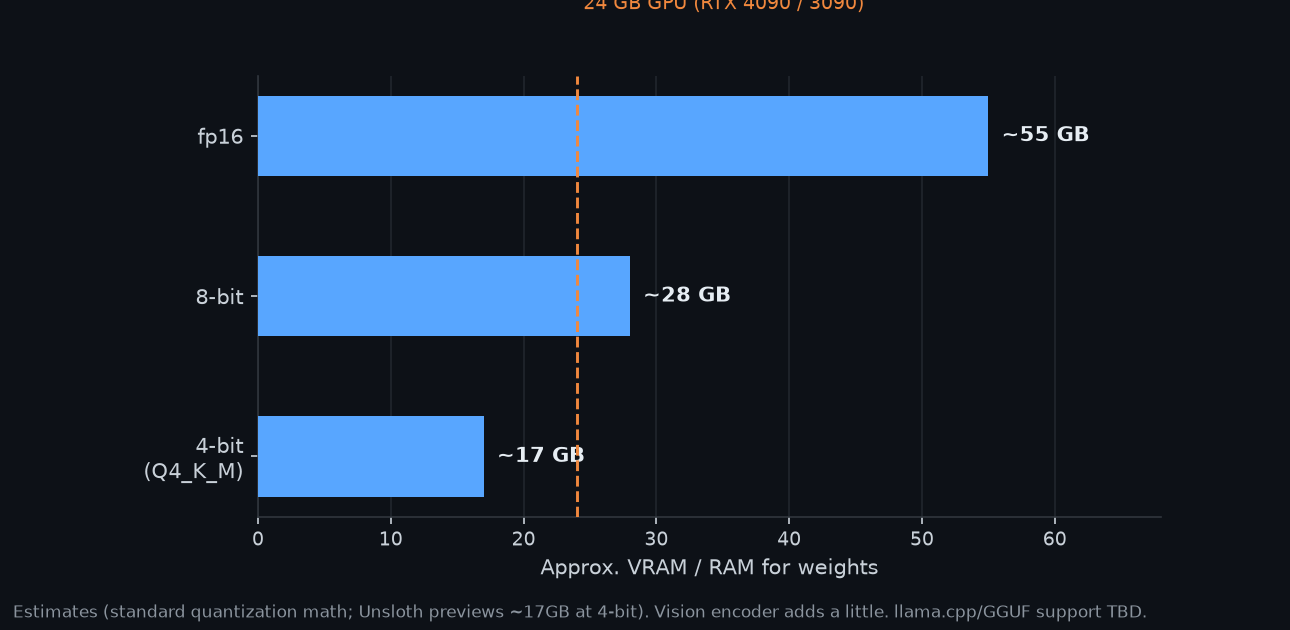
Twenty-seven billion dense sits in the local sweet spot. At 4-bit you're looking at roughly 17GB of VRAM, Unsloth's early estimate, which fits a 24GB card comfortably. 8-bit needs about 28GB and fp16 about 55GB. Add a little for the vision encoder on top.
The catch is the runtime. The hybrid DeltaNet architecture means the usual llama.cpp and GGUF route isn't guaranteed. If you're an Ollama person, you may be waiting for someone to land GGUF support first. If you've got a 24GB GPU and can run vLLM, you're in business today.
My take
The honest position right now is wait-and-see. The headline numbers are vendor-reported and the weights are a few hours old. I'd want independent benchmarks first, especially whether the DeepSWE jump survives a neutral harness. Then a feel for how the DeltaNet hybrid behaves in practice, since those models have been fast on paper and finicky on some runtimes. And GGUF support showing up quickly matters, because that's how most people run a 27B locally.
What's hard to ignore is the combination: 27B dense, vision, agentic computer use, Apache-2.0, no gate. I can't think of another open model at this size that hits all four. Qwen3.6-27B was widely considered the best local coding model you could run. This looks like Qwen going for the same title in agentic work.
I'll rerun this once independent numbers land and GGUF support appears. If the DeepSWE and OSWorld jumps hold, Qwen3.8-27B is going to be the model people are daily-driving by the end of the month.
Comments
Post a Comment