URXR One just hit Kickstarter: full spatial computing in a 93-gram frame
in a 93-gram frame
The whole 6DoF stack in something lighter than most sunglasses — powered by whatever's in your pocket
2026.08.05 · Open Source Factory
The URXR One campaign went live on Kickstarter yesterday (Aug 4), and I've been going back and forth on it since. Not because of the display — although that's impressive — but because of the 93 grams. An Apple Vision Pro is over 600. A Quest 3 is 515. This thing is lighter than most actual sunglasses, and it's doing 6DoF room-scale tracking with hand gestures.
Unseen Reality debuted it at AWE 2026 back in June, and the reviews that came out of the demo loop were... excited. MartydudeVR called it "an insane MR device." Another outlet put it bluntly: "the surprise wasn't the weight, it was the resolution and passthrough." Now it's on Kickstarter at $699 for early birds. Let me break down what's actually going on here.

▲ URXR One (source: Unseen Reality)
1. What it actually looks like
Before the spec sheet, let's establish what this thing is. Three official renders — because the form factor is the whole story:
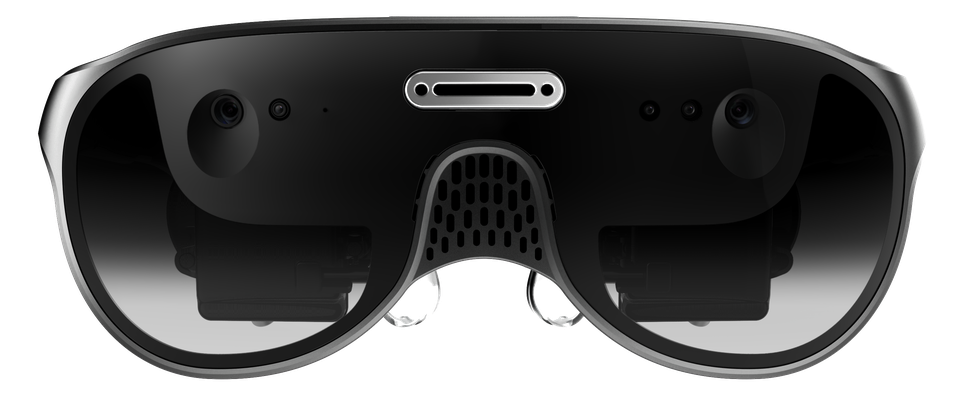
▲ Front view. Two pancake optics, a camera bar, and not much else — no fans, no battery bulge, no face gasket. (source: Unseen Reality)
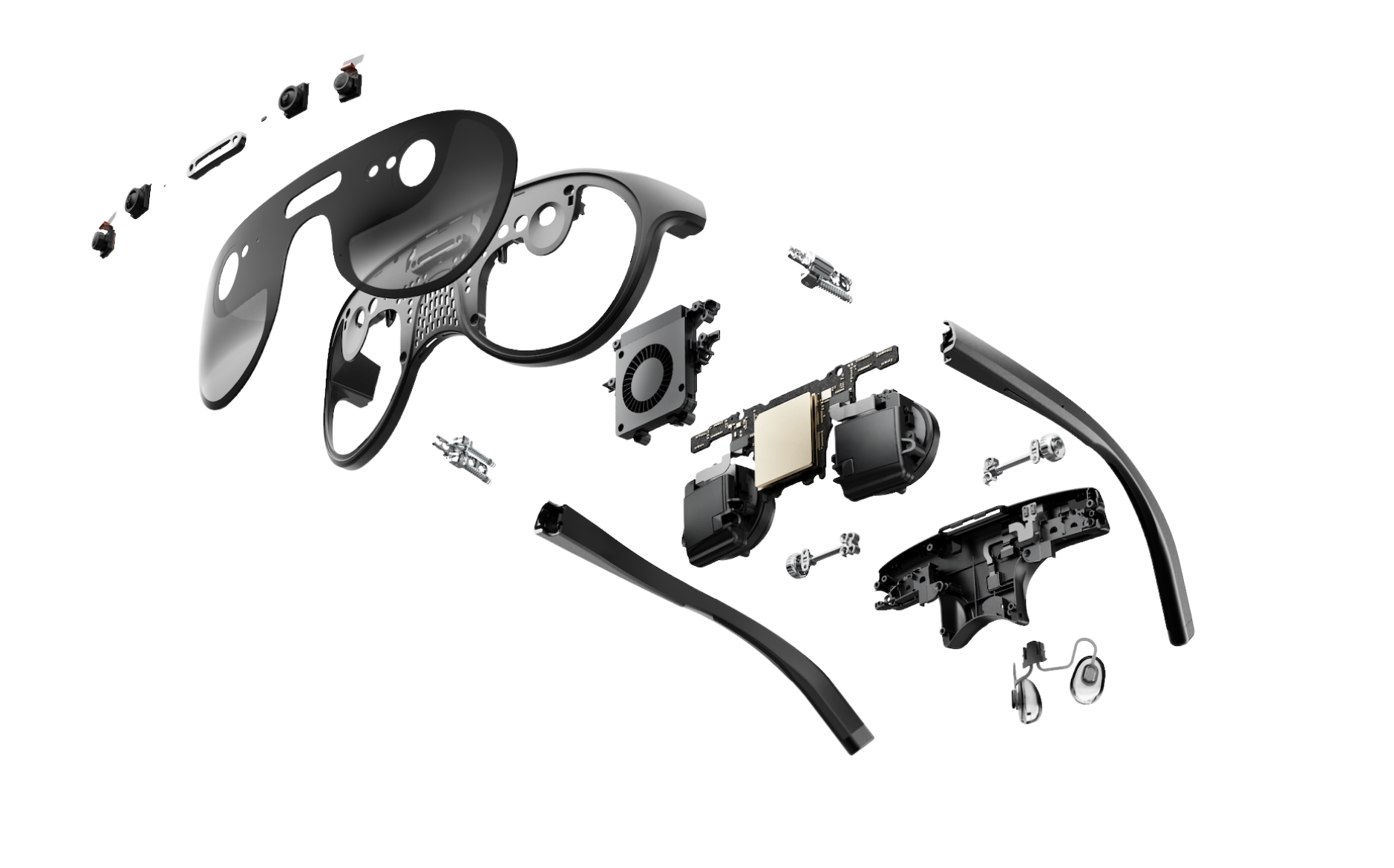
▲ Exploded view. Magnesium frame, mini pancake optics, camera modules, and the Spatial Processing Unit board that does the 6DoF tracking on-glasses. (source: Unseen Reality)
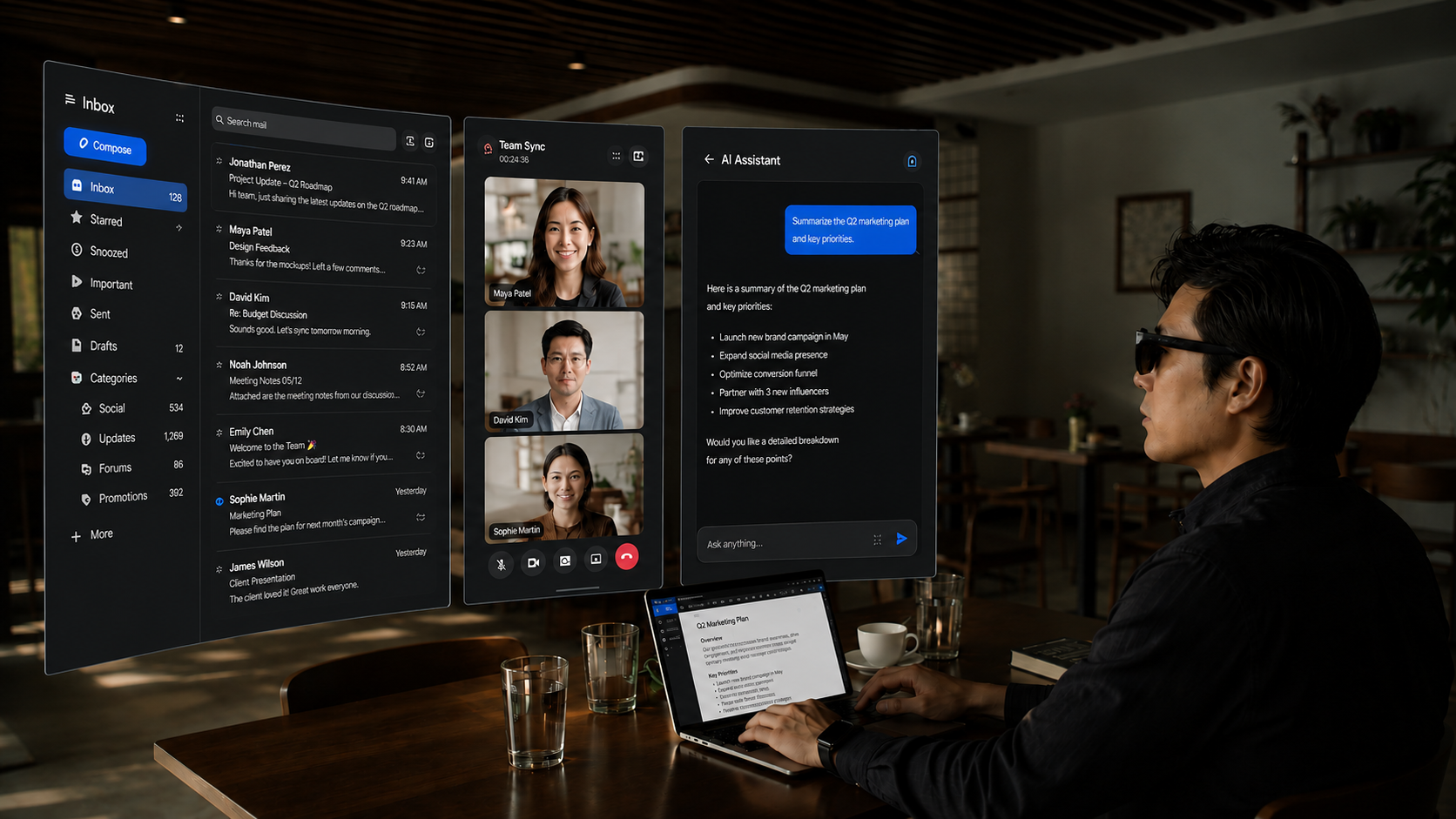
▲ In use. Plugged into a laptop over USB-C — the laptop is the computer, the glasses are the screen. (source: Unseen Reality)
2. The spec sheet, in plain words
| URXR One | Spec |
|---|---|
| Weight | 93 g — magnesium alloy frame |
| Display | Dual 1.03" micro-OLED, 2,448 × 2,064 per eye (~36 PPD), 90 Hz |
| Optics | Mini pancake lenses |
| Field of view | 90° diagonal (~80° H × 56° V) |
| See-through | Video passthrough, <10 ms latency |
| Tracking | 6DoF room-scale SLAM + 3DoF mode, computed on the glasses |
| Sensors | 4 forward cameras, dual-camera SLAM, 1,000 Hz 6-axis IMU, magnetometer, ambient light sensor, wear detection, 4-mic array |
| Input | Hand gesture — no controller needed |
| Compute | None on board — plugs into any USB-C DisplayPort device |
| Fit | Manual IPD 58–68 mm, custom prescription lens inserts |
| Audio | No built-in speakers — audio plays through your host device |
The resolution is the first thing that grabs you. 2,448 × 2,064 per eye is well above the 1080p that AR glasses have been stuck on — that's where the ~36 PPD comes from, meaningfully sharper than a Quest 3's ~25. The FOV, at 80° horizontal, sits between "glasses" and "VR headset" — bigger than anything in the glasses category, well short of a Quest 3's ~110°.
3. The clever (and weird) part: someone else's computer
Here's the architectural bet. URXR One has no onboard app compute — it's a display + a tracking chip, not a phone strapped to your face. You plug it into a USB-C DisplayPort device — laptop, tablet, Steam Deck, ROG Ally, even a Switch 2 — and that device is the computer. A dedicated Spatial Processing Unit on the glasses handles the 6DoF tracking and hand gestures, so the host just renders the video. The companion app runs on the host too.
Road to VR described it accurately: this isn't a birdbath-style AR glasses product like XREAL or Viture — it's essentially a VR headset with video passthrough, minus the headset. You get virtual screens you can resize from "laptop-sized" up to a 200-inch display, stack multiple windows, and pin them either locked (3DoF) or spatially anchored around your room (6DoF). Walk around, and the windows stay where you put them.
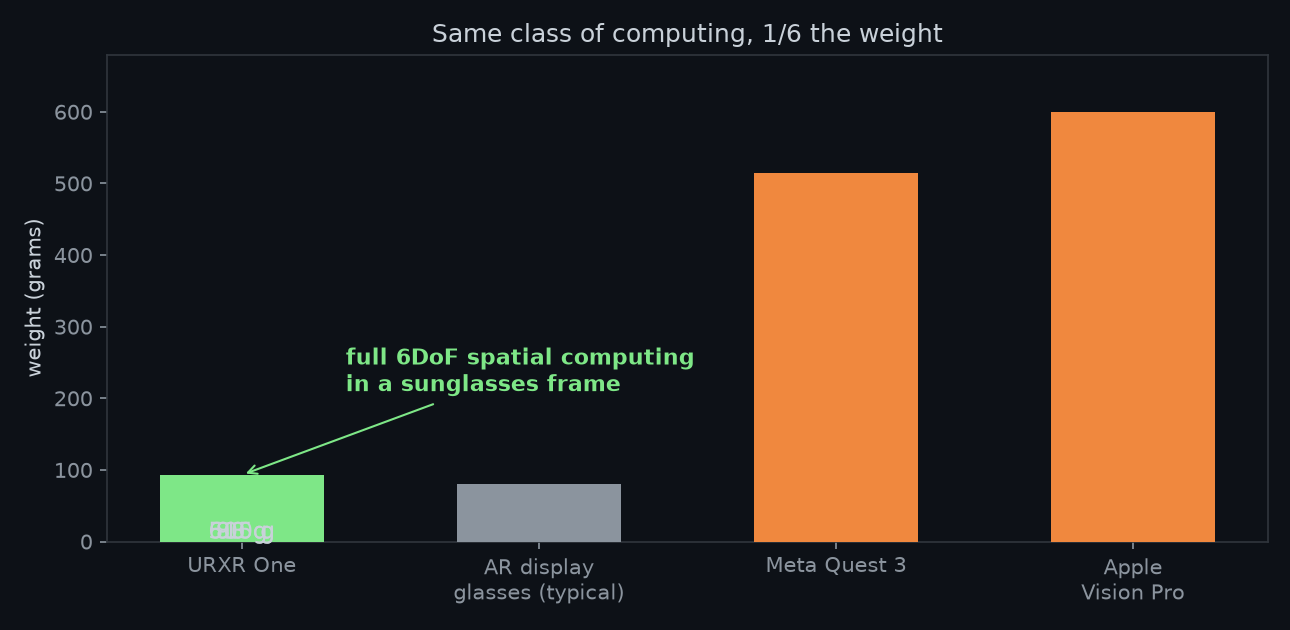
▲ Same class of computing as a Vision Pro, at a sixth of the weight. The sensor stack (4 cams, SLAM, 1 kHz IMU) is what makes the 93 g number wild.
4. The catches — and there are real ones
I watched the hands-on reviews carefully, because crowdfunding marketing is crowdfunding marketing. The things reviewers actually flagged:
🚫 No SteamVR at launch. If your plan was PC VR gaming, that's not what this ships as. The Windows app is a spatial-desktop companion, not a SteamVR runtime. Steam Deck / Switch 2 connectivity is about big-screen gaming in 2D, not VR.
🔇 No built-in speakers. Audio goes through your host device or earbuds. Fine for desk use, slightly odd for a wearable — a deliberate weight/complexity trade.
🌙 Hand tracking gives up in low light. No IR illuminators — the cameras need visible light. Dim room, and gesture control degrades noticeably. You can fall back to the phone/tablet as a touchpad.
📏 FOV is 80° horizontal. Great for the category, half of what a Quest 3 does. Virtual monitors work beautifully; immersion-heavy experiences will feel tunneled.
🔋 Phones need the Power Hub. Laptops/tablets/handhelds power the glasses over USB-C directly, but a phone typically can't — that's the optional $69 Power Hub (10,000 mAh, ~3 hours of glasses power, plus slow-charging your phone).
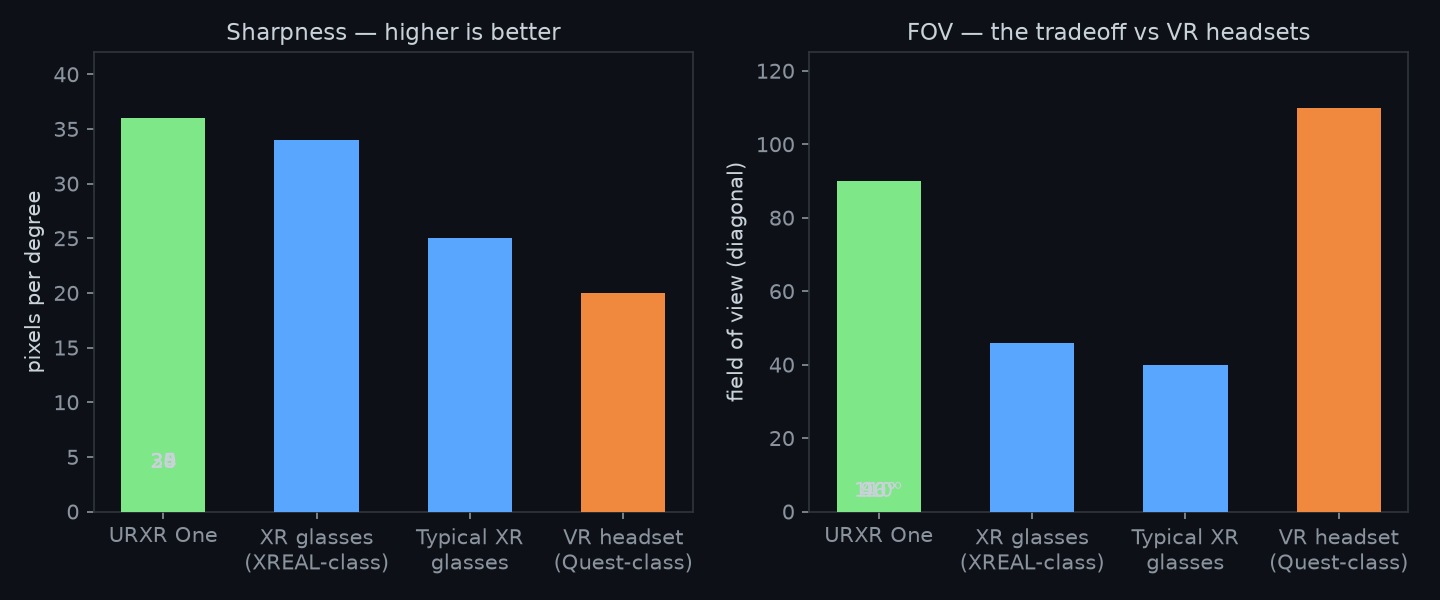
▲ Sharpness beats everything in the glasses category and most VR headsets; FOV is the honest tradeoff.
5. Pricing and the fine print
| Tier | Price | Notes |
|---|---|---|
| Early bird | $699 | Limited quantity |
| Kickstarter standard | $799 | Campaign price |
| Retail | $899 | Planned MSRP after campaign |
| URXR Power Hub | $69 | Optional — needed for phone hosts |
Ship target: mid-October 2026. This is a crowdfunding campaign — the usual rules apply: your money is a pre-order with real execution risk, timelines slip, and first-gen software is first-gen software.
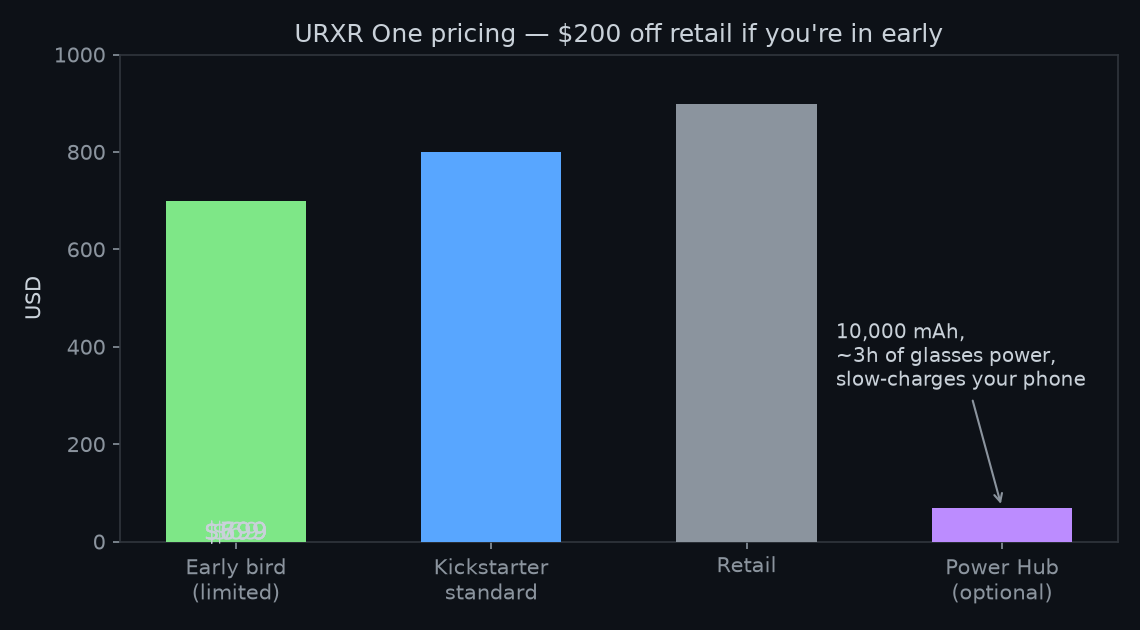
▲ $699 early-bird is a genuine $200 off retail — if you were going to buy this anyway.
My take
What's genuinely interesting here isn't any single spec — it's the partitioning. Unseen Reality split the problem the way nobody else has: leave the expensive, heavy compute on the device you already own, and put just enough smarts (tracking + display) in the frame. That's how you get 93 grams with 6DoF, when XREAL's comparable product needs a separate $99 accessory just to add 3DoF-on-a-stick. The unit economics and the form factor are both consequences of that one design decision.
What to watch: whether the software is actually ready at ship time (October is aggressive), how the Windows spatial-desktop app holds up for real work, and whether they ship a SteamVR path eventually. And the honest caveat: Kickstarter hardware is a bet. The demos looked genuinely good — multiple independent reviewers, not just marketing — but demos are demos.
If the "spatial desktop in sunglasses" pitch is exactly what you've been waiting for, $699 early-bird is a real discount. If you can wait, the retail price isn't that far off, and waiting buys you shipping-unit reviews. I'm rooting for the 93-gram future either way — I just wouldn't bet my whole monitor budget on the first batch.
📌 Sources & filters
Sources: Unseen Reality (unseen-reality.com, press release 2026-06-16 & 2026-08-04, official specs/blog) · Kickstarter campaign (live 2026-08-04, funding total changes hourly — check the campaign page) · Road to VR · VR.org (2026-08-02) · TechTimes (2026-08-01) · hands-on reviews: MartydudeVR, vrgamerdude, AWE 2026 demo coverage. Specs are vendor-reported; the catches section reflects what independent reviewers observed on demo units, not shipping hardware. No shipping units exist yet as of this writing.
Related on this blog: the head-to-head against Quest 3 · full-color 3D printing on Kickstarter
Open Source Factory · opensourcefactory1.blogspot.com · Written 2026-08-05
Comments
Post a Comment