Muse Spark 1.3: 88.8 on Terminal-Bench, at 1/6 of Opus 5's Price
Muse Spark 1.3: 88.8 on Terminal-Bench, at 1/6 of Opus 5's Price
Meta shipped Muse Spark 1.3 yesterday, and the launch table is genuinely surprising in one very specific way: on coding, the model ties GPT-5.6 Sol at 88.8 on Terminal-Bench and edges Opus 5 on DeepSWE — while the API price for the flagship starts at $0.10 / $0.20 per million tokens if you let Meta train on your traffic. I read the scorecard twice, because the asterisks are doing a lot of work. Let me show you what's real, what's a column-header trick, and what the $0.20 output token actually buys.
Four releases in five months. The original Muse Spark landed April 8, 1.1 in July, the coding-focused 1.2 on August 5, and now 1.3 less than a month later — announced by Zuckerberg himself with the line that's been stuck in my head since: "frontier performance almost too cheap to meter." He also teased open weights for the Spark line plus a mysterious watermelon-emoji release, both with no dates. If you've been watching this blog you already know the family: closed-weights, hosted-only, 1M-token context, built for agentic and coding work. Muse Glimmer is the open-weights little brother; Muse Spark is the paid engine.
What the scorecard actually says
Meta published an eleven-benchmark comparison against its own 1.2, GPT-5.6 Sol (max) and Claude Opus 5 (max). Read across the rows and the pattern is cleaner than the press release: 1.3 owns long context and coding, and it's a strong second on general agent work.
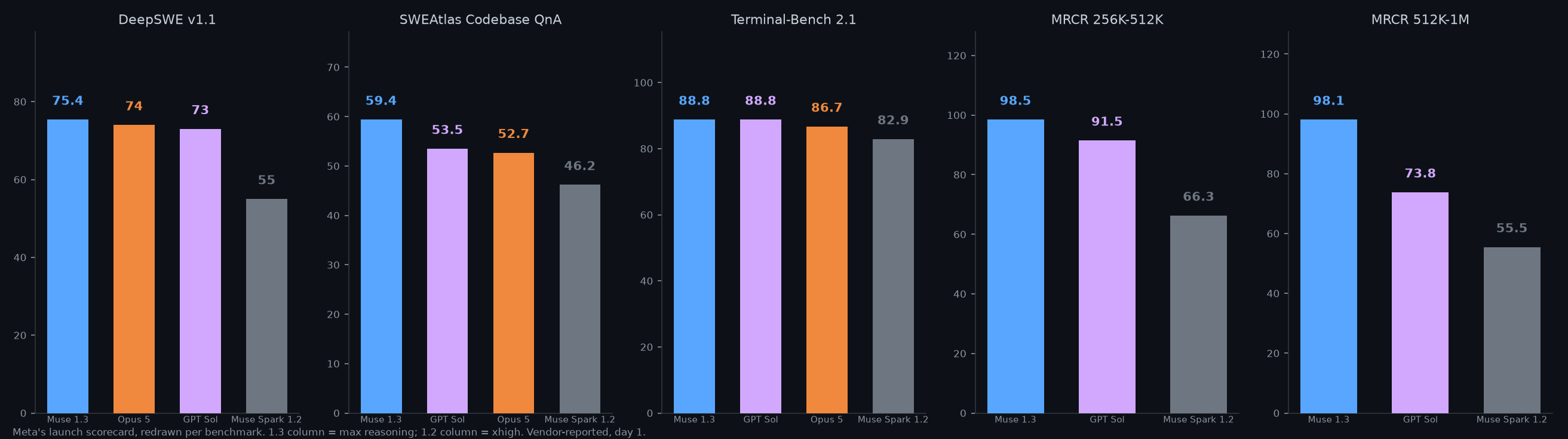
The headline rows: 75.4 on DeepSWE v1.1 (ahead of Opus 5's 74.0 and Sol's 73.0), 59.4 on SWEAtlas Codebase QnA (vs 53.5 / 52.7), and a tie with Sol at 88.8 on Terminal-Bench 2.1 (Opus 5 sits at 86.7). The long-context numbers are the sharpest part of the release: 98.5 on MRCR at 256K–512K and 98.1 at 512K–1M, versus Sol's 91.5 and 73.8 — and its own predecessor 1.2 only managed 66.3 and 55.5. For anyone who runs agents against a whole codebase, that gap is where money gets saved: losing the thread mid-task is what makes long agent runs expensive.
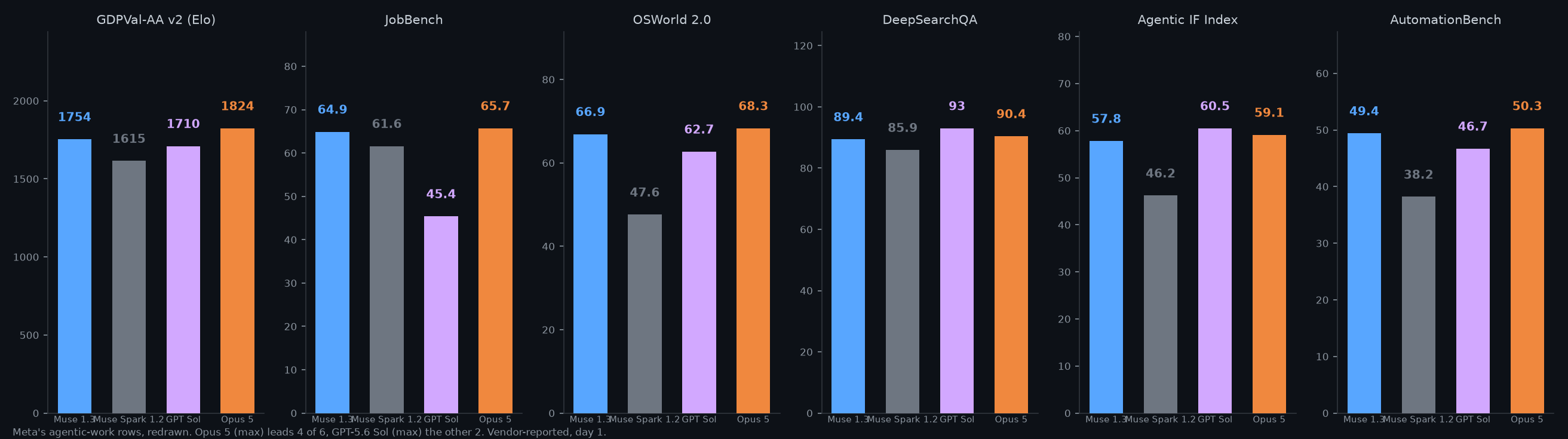
Now the asterisk, and it's a real one. Look at the column headers: the 1.3 column is max reasoning, while the 1.2 column is xhigh — a lower reasoning tier. So some of the flashiest jumps (OSWorld going 47.6 → 66.9, MRCR 66.3 → 98.5) are partly a max-vs-xhigh gap, not a pure version-over-version gain. And here's the kicker: max reasoning wasn't even shipping at launch. Meta said the previously-available modes (including xhigh) went live day one, with max held back for "additional safety testing." The headline scores are measured on a mode you couldn't call yet. Artificial Analysis rates the shipping xhigh variant at 61 on its Intelligence Index against 62 for max — close, but the distinction matters if you're comparing against the 1.2 numbers.
The price is the story: one model, two SKUs, a 21x gap
Here's where it gets interesting. Muse Spark 1.3 ships as the same checkpoint twice, priced entirely on what happens to your data:
| Tier | Input / 1M | Cached / 1M | Output / 1M | Your data |
|---|---|---|---|---|
muse-spark-1.3 (standard) | $1.25 | $0.15 | $4.25 | Not used for training |
muse-spark-1.3-contributor | $0.10 | $0.002 | $0.20 | May train Meta models |
The contributor tier is roughly 12.5x cheaper on input and 21x cheaper on output — and it undercuts almost everything on the board, including DeepSeek's off-peak rate on input. But the fine print is real: prompts and completions (including the code in the repos you point it at) can become Meta training data. Contributor also runs far tighter operational limits — 60 requests per minute against 3,000 on standard — and web-search grounding is NOT discounted ($2.50 per 1,000 queries on both tiers), so a retrieval-heavy agent sees a smaller saving than the token rates imply. Reasoning tokens bill as output, which is exactly where the 21x gap lives.
Meta says a "meaningful double-digit percentage" of developers already pick the contributor tier — its AI chief Alexandr Wang called the whole pricing structure "aggressive." One HN commenter summed the trade up better than any press release: "It's not that Meta really wants your data and they're willing to pay top dollar for it. It's that companies really don't want Meta to have their data and they're willing to pay top dollar for that." Pick the endpoint that matches how sensitive the input is, not the one with the smaller number.
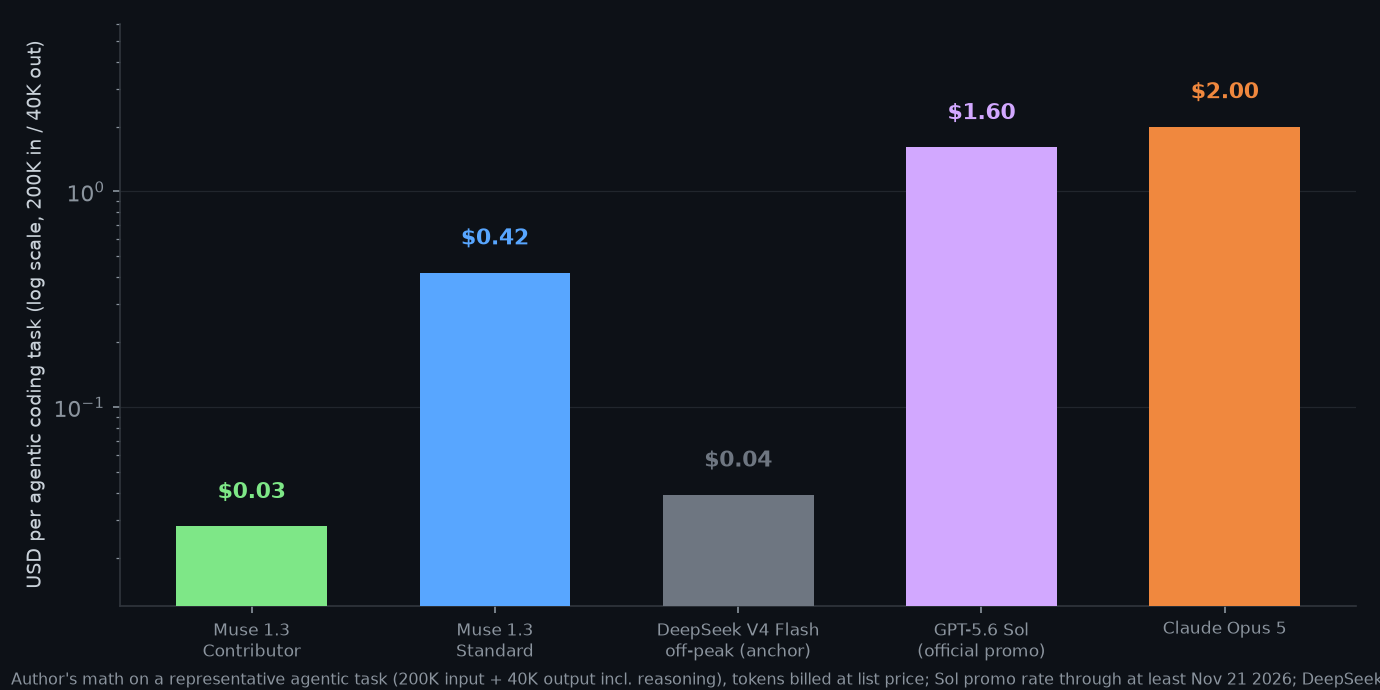
Then Meta's own efficiency claims compound the discount: its engineers report ~20% fewer tool calls and ~25% fewer tokens than 1.2 to finish the same coding job. Fewer tokens on a $0.20 output rate is the rare kind of announcement where the cost math gets better, not just the leaderboard.
What it actually produces
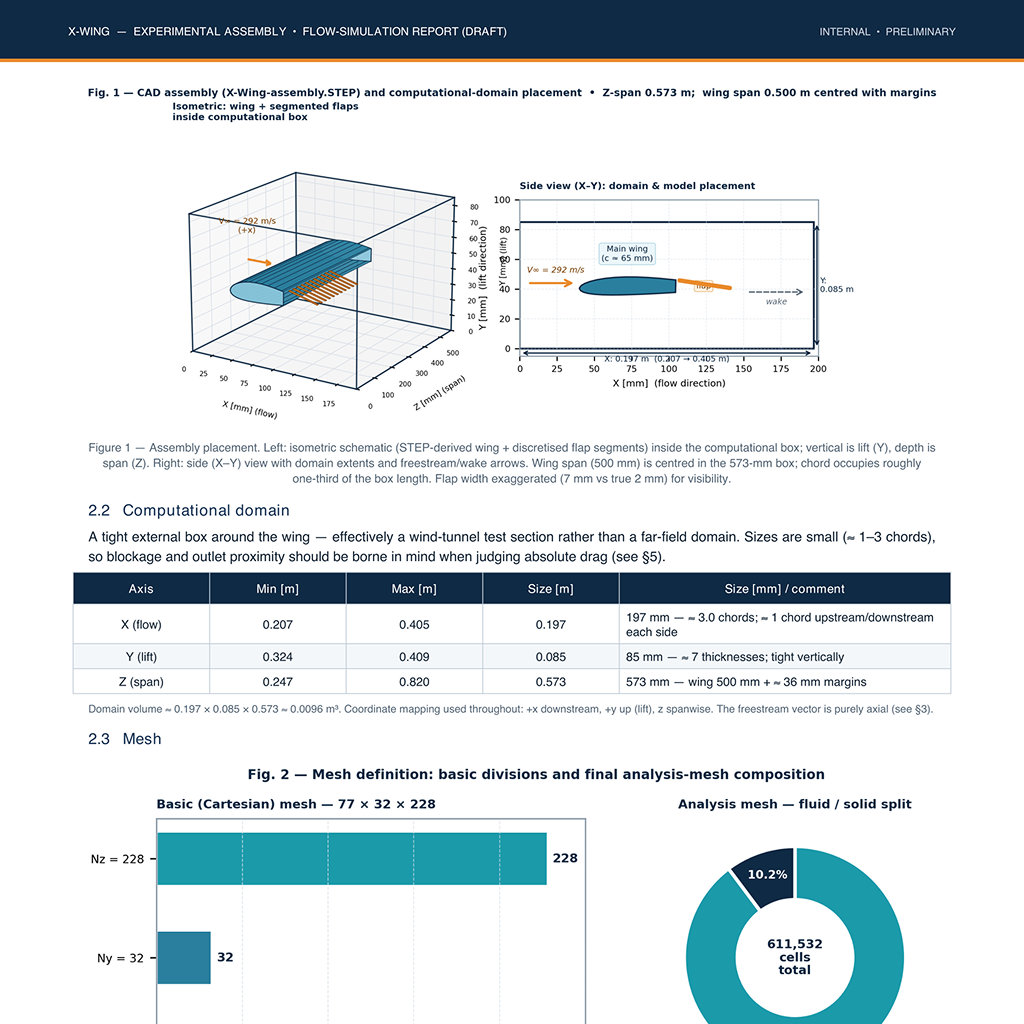
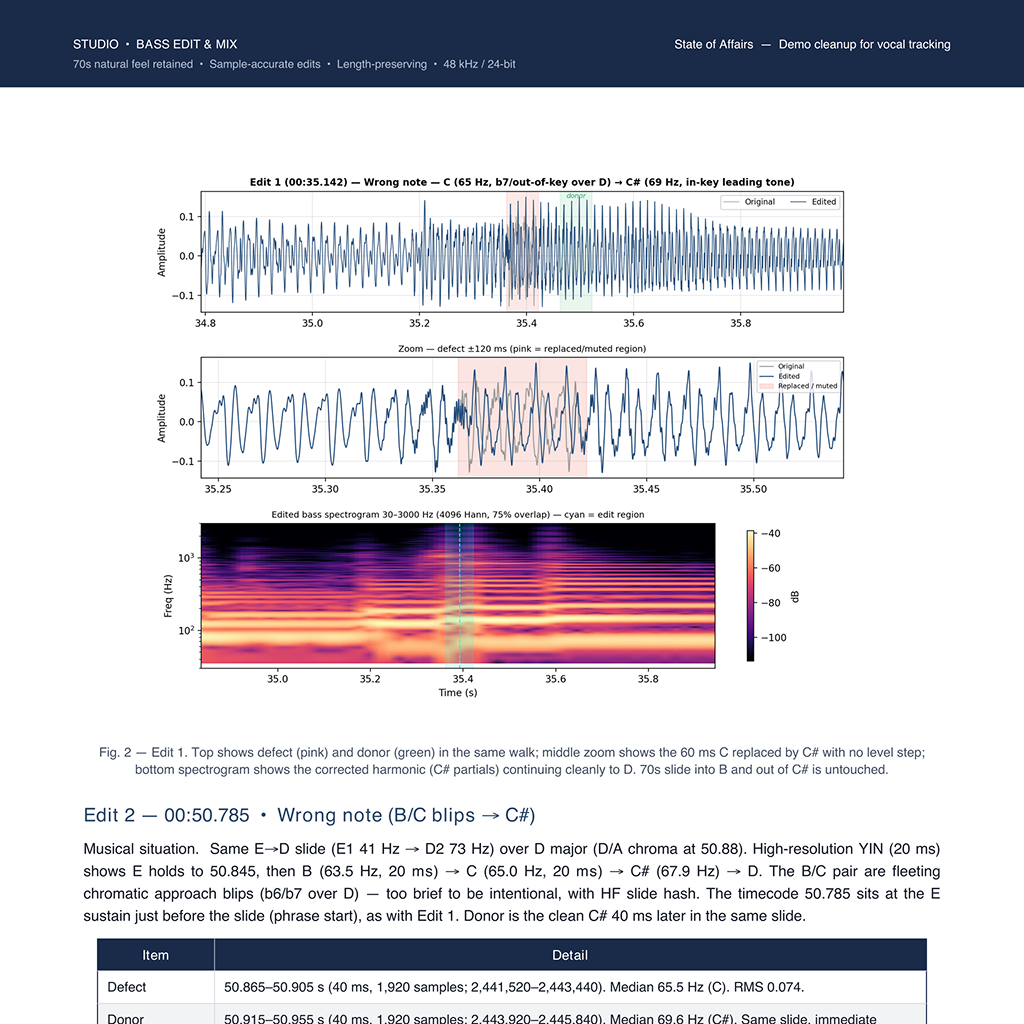
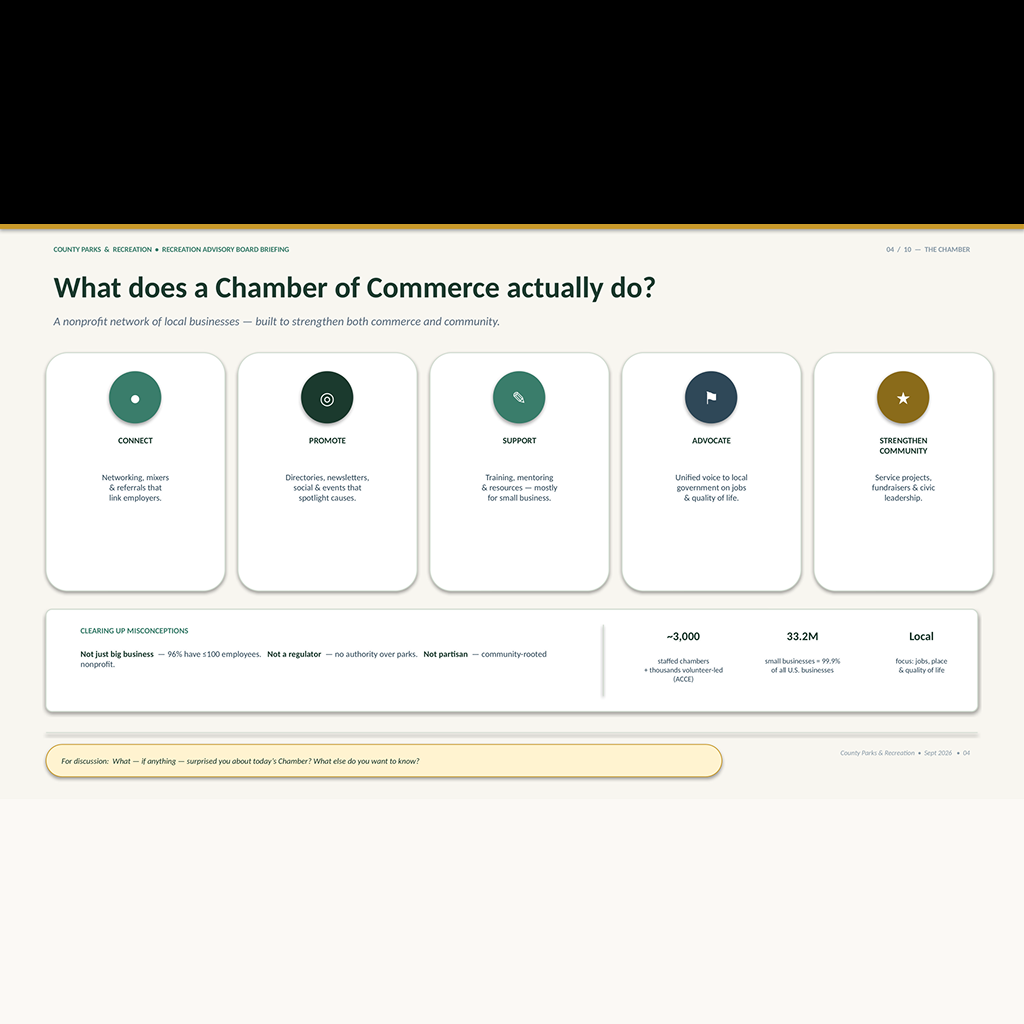
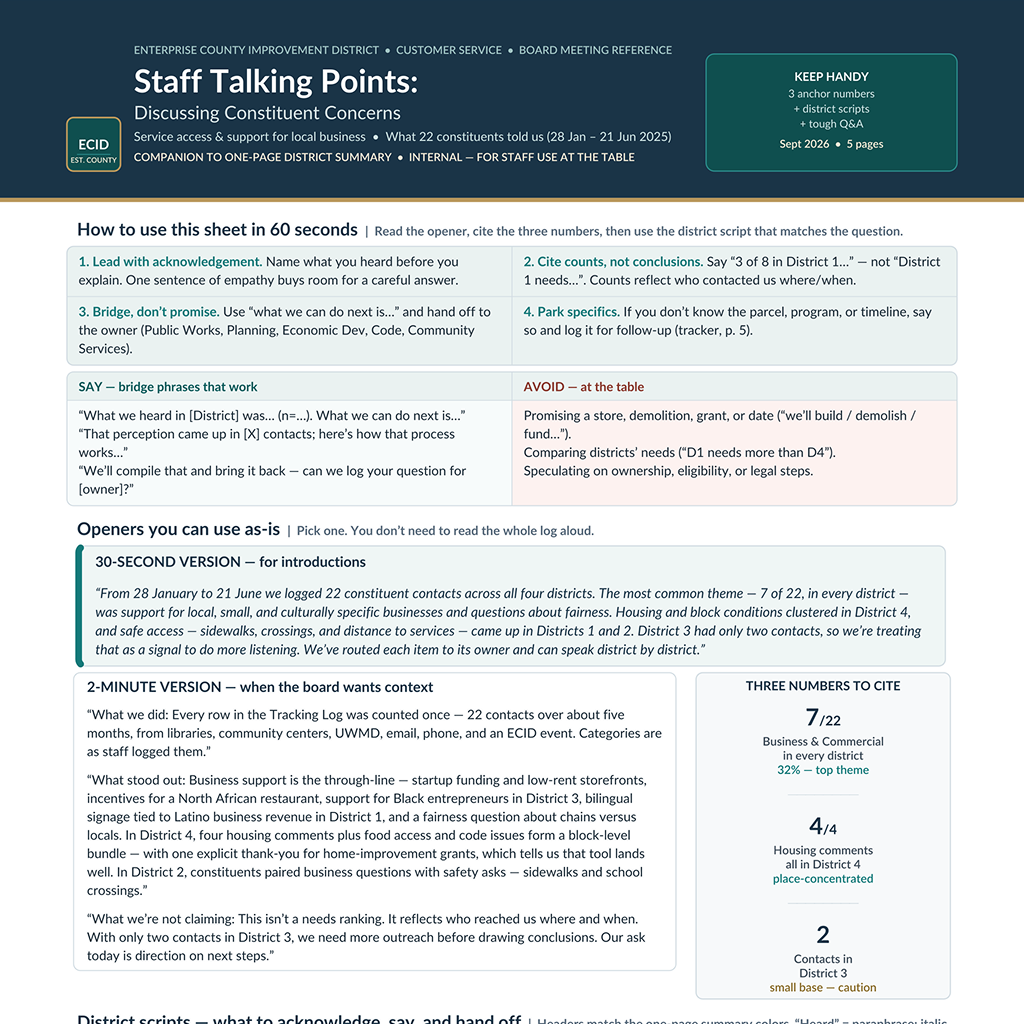
Meta's launch post shows real GDPVal deliverables the model generated end-to-end — the "show your work" section most model announcements skip. These are the kind of artifacts that matter if you're evaluating an agent, not a chatbot: a flow-simulation report built from CFD results plus a CAD STEP file, a full audio edit and mix, a chamber-of-commerce presentation, and talking points pulled from a messy research stack.
So, does it beat Opus 5?
On coding, yes — narrowly, and only on Meta's own day-one table, which is vendor-reported and not yet reproduced by an independent harness. On general agent work, no: Opus 5 (max) leads four of the six agent benchmarks in that same table and GPT-5.6 Sol leads the other two. The honest read is a model that closed most of the gap in five months and specifically pulled ahead where it matters for coding agents — then priced that lead as aggressively as anything on the market.
Two more caveats while I'm here. First, Artificial Analysis measured 1.3 (max) burning 120M output tokens to complete its full Intelligence Index against a field median of 72M — roughly 1.7x the median verbosity, and community testing pegged it closer to 3x 1.2's token use on real tasks. A model that thinks out loud more isn't automatically cheaper just because its per-token price is low; worth simulating on your own workload. Second, the shipping mode at launch is xhigh, not the max that headlines the scorecard — and the contributor tier's 60-requests-per-minute ceiling rules it out for bursty CI or big parallel eval runs.
My take
This is the cheapest way I've seen to put a frontier-adjacent coding model in front of real agent work. Five months ago this family didn't exist; today it ties GPT-5.6 Sol on the terminal benchmark that matters most to people who actually run coding agents, and the contributor SKU prices a finished coding task around a tenth of what the same job costs on the standard tier of most rivals. The trade — Meta trains on your code — is the kind of thing you either can live with (personal projects, throwaway scripts, open repos) or absolutely cannot (client work, proprietary code, regulated data), and Meta was unusually honest by pricing the two cases side by side instead of burying the consent in a settings toggle.
What I'm watching now: whether an independent harness confirms those 88.8 / 75.4 numbers (Artificial Analysis has 1.3 up but no full independent run yet), when max reasoning actually ships, and whether that watermelon tease turns into a real open-weights release — the open-weight Spark is the one that would actually pressure the whole premium coding market, and this blog has a history with Meta's open line. If any of those land, I'll post a follow-up.
Comments
Post a Comment