Odyssey-3: Does the World Stay Put When You Turn?
HARDWARE & DESIGN
Odyssey-3: Does the World Stay Put When You Turn?
Turn around in a generated street and the system has to remember what was behind you. Walk back and it has to keep the route coherent too. Those ordinary actions give Odyssey-3's interactive-world claim a more demanding test than an attractive forward-moving clip.
In this article
Odyssey-3 generates a world that responds as you act inside it. Its October 8, 2026 research-preview announcement follows the September 15 introduction. The interesting shift is that your next action can influence the scene while it unfolds. I see a promising way to explore environments and test agents, provided the world stays coherent.
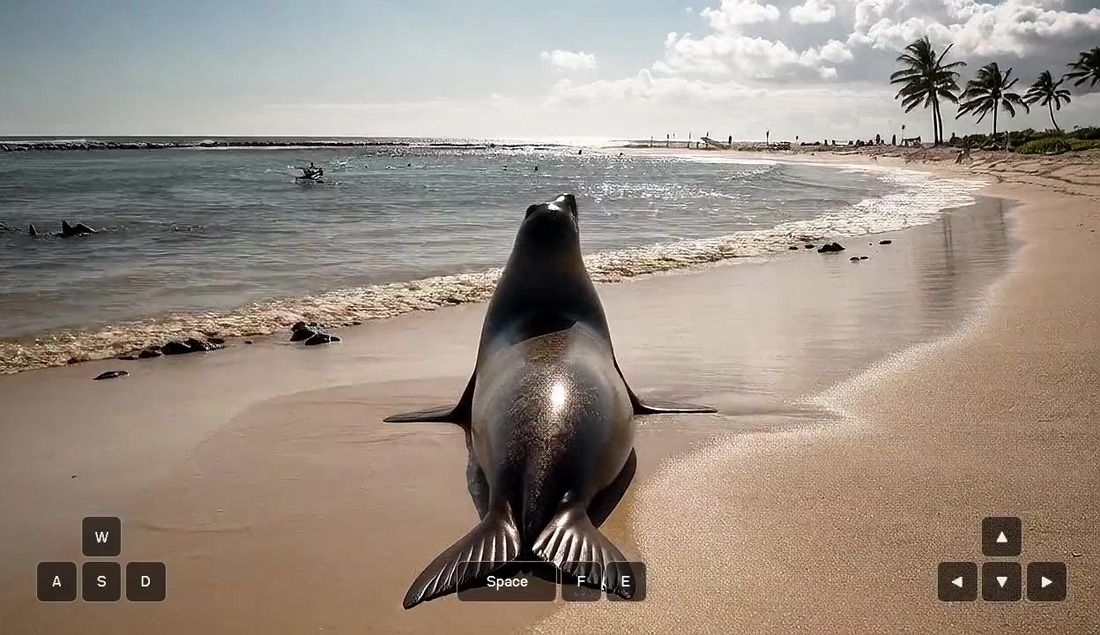
Actions that change the next frame
A finished clip already contains the camera movement. An interactive generator has to accept another decision: keep walking, change direction, or look somewhere else. That makes continuity part of the experience. If a door shifts whenever I turn my head, I can no longer plan a route through the room.
The loop below is how I think about that difference. An observation gives the user or agent something to act on. The action helps determine the next observation, which becomes the basis for another decision. Each step creates an opportunity for useful behavior, and another chance for the world to contradict itself.
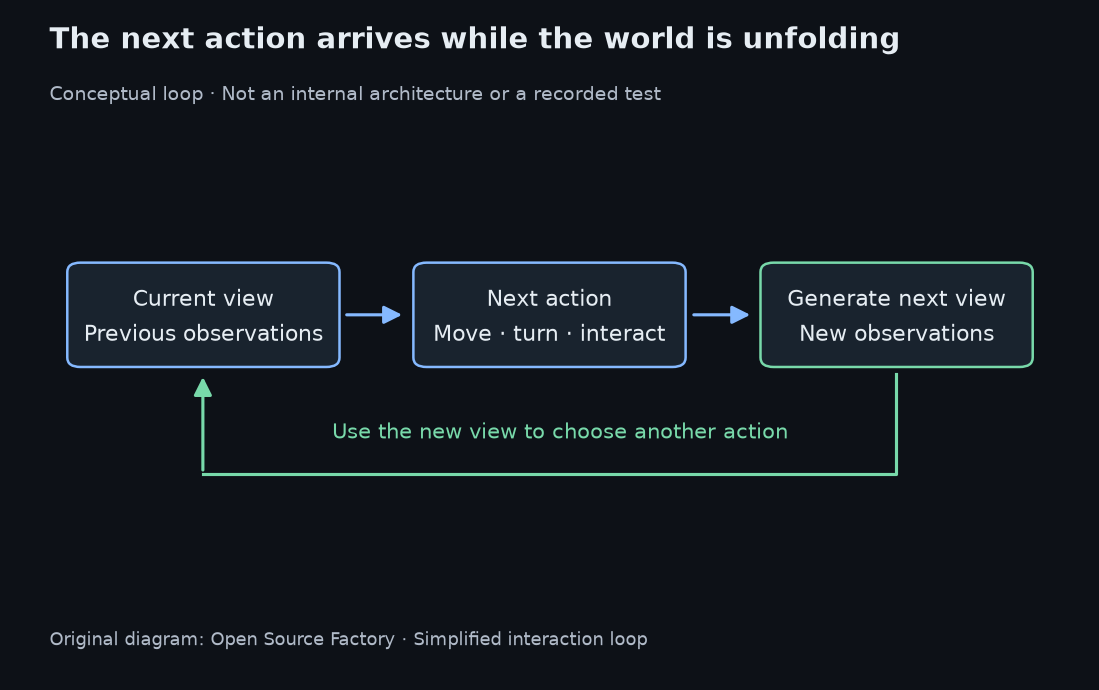
The announcement links to an Odyssey-3 Flash preview. That variant distinction matters when reading the charts later: the reported Pro scores do not tell us how Flash feels under live controls. I have not run the preview, so I am treating the official examples as demonstrations to investigate.
A convincing generated scene also leaves practical questions open. Can I reliably repeat a task? Can I preserve a starting state? What exactly counts as success when the environment can change? For a game designer or agent researcher, those questions will decide how useful an interactive world becomes. A still image cannot answer them.
Physics scores and scene persistence
The Physics-IQ Verified evaluation examines physical behavior in generated video. Odyssey’s October 8 charts, citing an October 7 snapshot, report Pro results of 66.1 for video-to-video and 54.7 for image-to-video under best-of-eight selection. These are benchmark scores on separate tasks, not percentages of real-world situations solved.
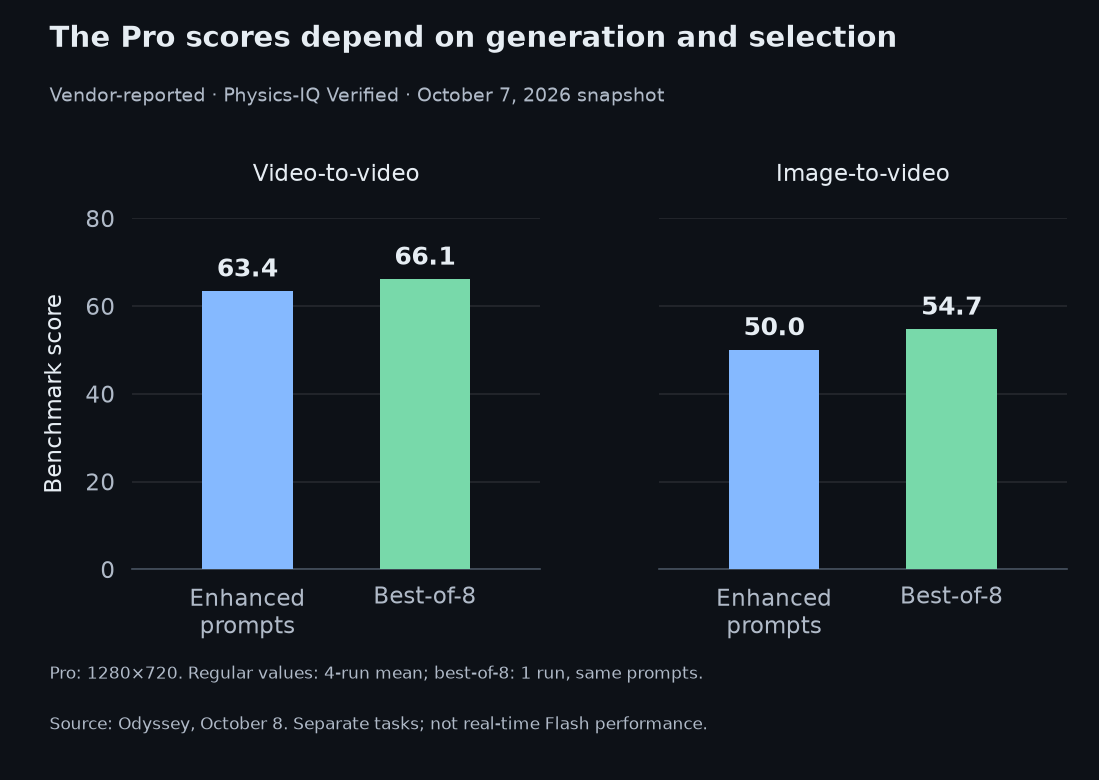
The selection condition changes how I read those numbers. Choosing among eight candidates allows a result to be selected after generation. In an interactive session, the next response has to arrive in time for the user’s next decision. A strong selected clip is encouraging, but I would still want to examine the live path without picking a favorable replay.
WorldMark asks a complementary set of questions: does motion follow the command, does the environment remember itself, and do the frames look good? Its published suite contains 500 cases. Turning away and coming back is especially useful to me, because that tests whether a place persists beyond the current view.
There is a small detail in the scoring worth unpacking. WorldMark defines nine metric families, while Odyssey reports a simple mean over 13 columns. Those descriptions fit together: four action metrics each have translation and rotation columns, plus three memory and two visual-quality columns. That is 8 + 3 + 2 = 13.
In that plain column average, action-related columns occupy 8/13, or about 61.5% of the entries. This is my arithmetic from the published table structure. It explains why I would inspect revisit memory separately instead of relying on one overall number. A good average can conceal precisely the behavior a navigation task needs.
From generated scenes to robot trials
The original introduction describes training an action decoder on paired observations and actions. That component connects the model’s representations to the controls of a particular machine. A foundation model’s broad training, adaptation to a robot, and dependable deployment are three different pieces of work.
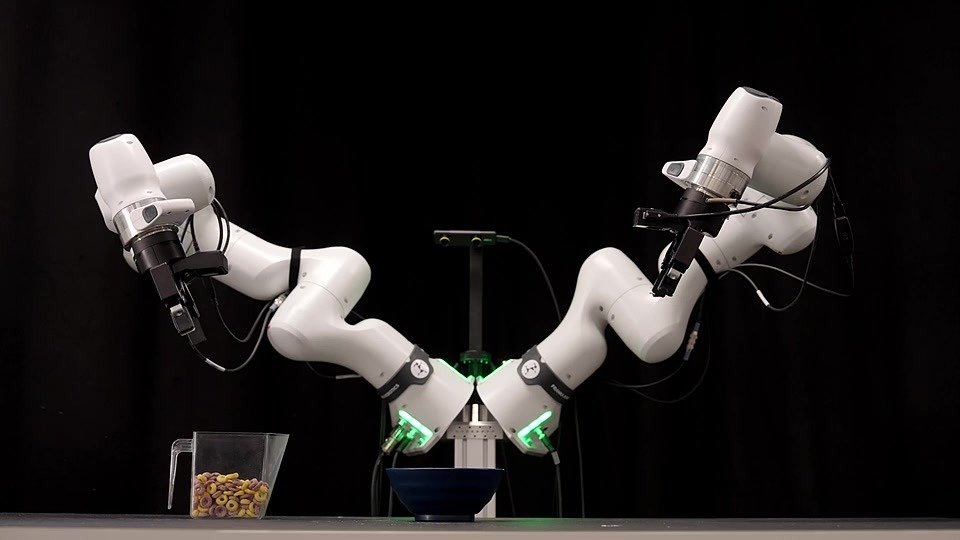
Odyssey reports robot examples that include adjusting after a missed grasp and retrieving a dropped object. Those interruptions are useful evaluation cases because a prepared demonstration can conceal how much recovery work the system needs. The published examples show selected behavior; they do not establish a general recovery rate.
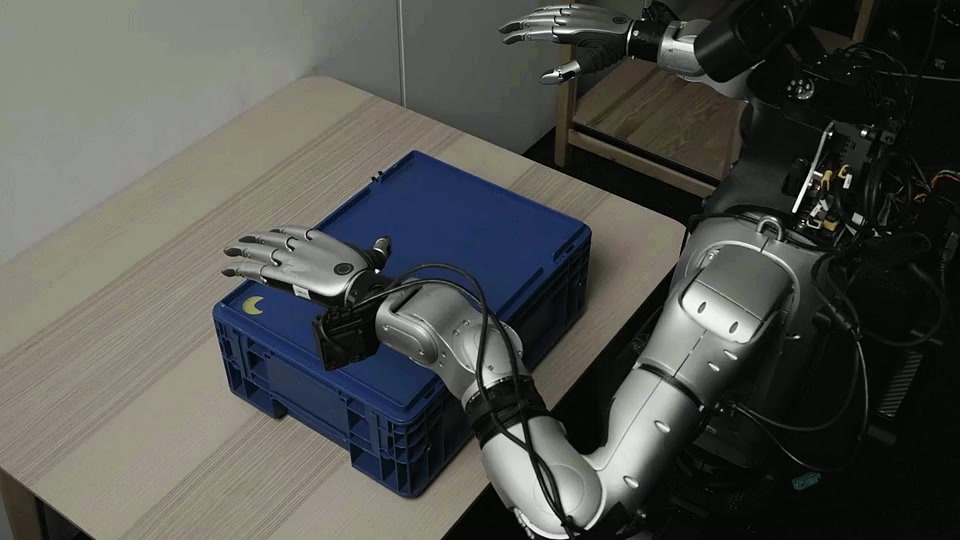
For a deployment decision, I would ask for the number of attempts, human interventions and time spent recovering. I would also want the same task under changed viewpoints and lighting. The posts’ selected demonstrations give us reasons to test these behaviors; they leave their frequency and operating limits to establish.
This connects with our earlier Flourish 1 article about teaching a home robot by phone: collecting useful demonstrations remains a practical bottleneck. That is a thematic connection, not a claim that Flourish uses Odyssey or that the systems work together.
A repeatable Flash trial
I would start with a plain corridor or a room with one distinctive landmark. A spectacular fantasy scene makes errors easy to overlook. A simple setting makes it easier to say what should have remained in place. These are proposed tests, with no results claimed.
| Test | What I would record |
|---|---|
| Reverse a command | Move forward, then backward. Record whether motion changes direction and when it responds. |
| Revisit a landmark | Turn away from a colored door, then return. Check its position, shape and surrounding layout. |
| Inspect persistence | Keep one visible object in view while moving. Record jumps, disappearance or changes in identity. |
| Repeat the session | Reuse the same scene description and action sequence. Keep every attempt, including failures. |
I would capture the controls alongside the video, use the same observation rules across runs, and keep response time separate from visual consistency. A quick response can still change the room. A coherent room can still react too slowly. Combining those two observations too early would hide the cause of a bad experience.
Repeating a prompt is also a test of variability. I would not assume it recreates the same initial state. For an agent experiment, a replayable starting state and a clear completion rule would be particularly valuable. Otherwise, a better-looking run could simply have presented an easier task.
Odyssey-3 gives me a concrete reason to pay attention to world models: actions can become part of generation as the experience continues. That could make a scene useful as a place to explore, or as an environment where an agent practices making decisions. The quality that matters most to me is whether those decisions have stable consequences.
A short, recorded Flash trial could test whether a place remains recognizable after leaving and returning. Keep the actions and camera path so another trial can repeat them. Pro’s published scores are context for the family, but they cannot substitute for that check on the preview a reader can actually use.
Comments
Post a Comment