Claude Code Weekly Limits Fell 17%. Anthropic Calls It a 25% Increase
Claude Code Weekly Limits Fell 17%. Anthropic Calls It a 25% Increase
 by OpenSource Factory · September 15, 2026 · Anthropic / Claude Code
If your weekly bar in Claude Code has felt shorter this week, you're not imagining it. On September 14, the "permanent 25% increase" Anthropic promised in late August went live — and anyone who has been coding with Claude Code through the summer woke up to about 17% less weekly headroom than they had the day before. Both of those sentences are true. Which one you feel depends on which baseline you've been budgeting against.
Here's the whole thing in one line of arithmetic. Index the pre-promotion weekly limit at 100. The summer promotion took it to 150. The new permanent level is 125. Against the old baseline that's +25% — the number in Anthropic's announcement. Against what you actually had on September 13, it's 125 ÷ 150 = 0.833, a 16.7% cut, which Anthropic itself rounded to "a 17% reduction" in a follow-up post. One change, two accurate percentages, and a very different mood depending on where you stand.
So is it a raise or a cut? Both, depending on your baseline
This isn't a scandal buried in fine print — Anthropic published both numbers itself, one post apart. The first post led with the increase, measured against the standard limit that existed before the May promotion. The second, posted the same day, stated the reduction, measured against what users have actually been running on since spring. Both are correct.
The confusing part is the reference point, and that's worth internalizing for the next announcement too. A percentage change with no stated baseline isn't a fact; it's a framing choice. And there's a nastier wrinkle: percentage moves don't reverse at the same size. Going from 150 down to 125 is a 16.7% cut, but climbing back from 125 up to 150 would take a 20% increase.
That asymmetry is exactly why promotional capacity makes a terrible baseline. If you sized your workflows during the boost — which, by August, was most heavy users — September 14 felt like a downgrade, because against your working number, it is one.
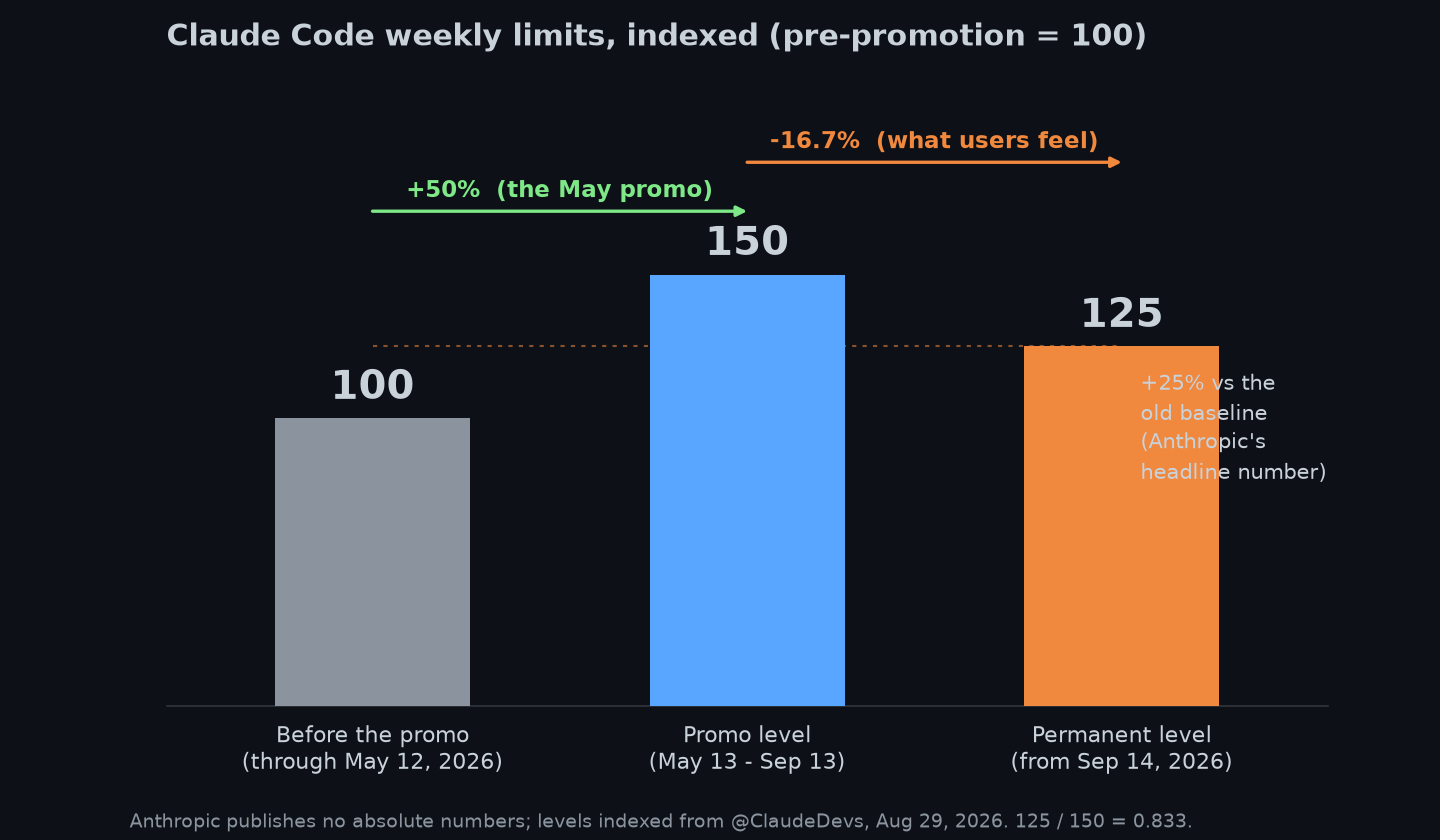
The three numbers behind the argument: 100 before the May promotion, 150 during it, 125 from September 14. Both of Anthropic's percentages describe a single step between these bars. (chart: OpenSource Factory; levels reported by Anthropic, August 29, 2026)
How a "temporary" boost ran for four months
The promotion started on May 13, 2026. It applied automatically to Pro, Max, and Team plans plus legacy seat-based Enterprise seats, and lifted weekly limits 50% above the standard level. Free plans and consumption-based Enterprise seats were never included. The five-hour session limits were untouched — that part has been consistent through all of this.
What happened next is what set users up for the shock. The promotion was originally due to end on July 13. Then the end date moved — to July 19, to August 19, to August 31, and finally to September 13 at 11:59 PM PT. Four extensions. By the time it actually expired, the boosted level had been the only level most users knew for four months. A deadline that moves four times stops reading as temporary.
On August 29, Anthropic's developer account posted the plan: a permanent 25% raise over the old standard, effective September 14, with the 50% boost staying in place until then. BleepingComputer reported that Anthropic then deleted the original thread and reposted a clarification — this time leading with the reduction:
"Compared to today, this works out to a 17% reduction in weekly limits on Claude Code. We're working on exciting changes that will make it feel like you're getting more from Claude, while having more visibility and control of your usage. Can't wait to share them."
— @ClaudeDevs, August 29, 2026
Give them credit for saying it plainly the second time. The first framing still did its job, though, and developers noticed within hours. Theo (t3.gg) summed it up in one line on X: "Anthropic increased Claude Code rate limits by -17%! Wait that's not right..." On Hacker News, one commenter worked the arithmetic in public — "going from 150% to 125%, where 1.25/1.50 = 0.83, so they're calling that a 17% reduction" — and another just asked whether Anthropic thinks developers can't do elementary-school math. Over on r/Anthropic, the mood was blunter and more practical: "with Claude I am checking it like every 30 minutes and rationing my week out."
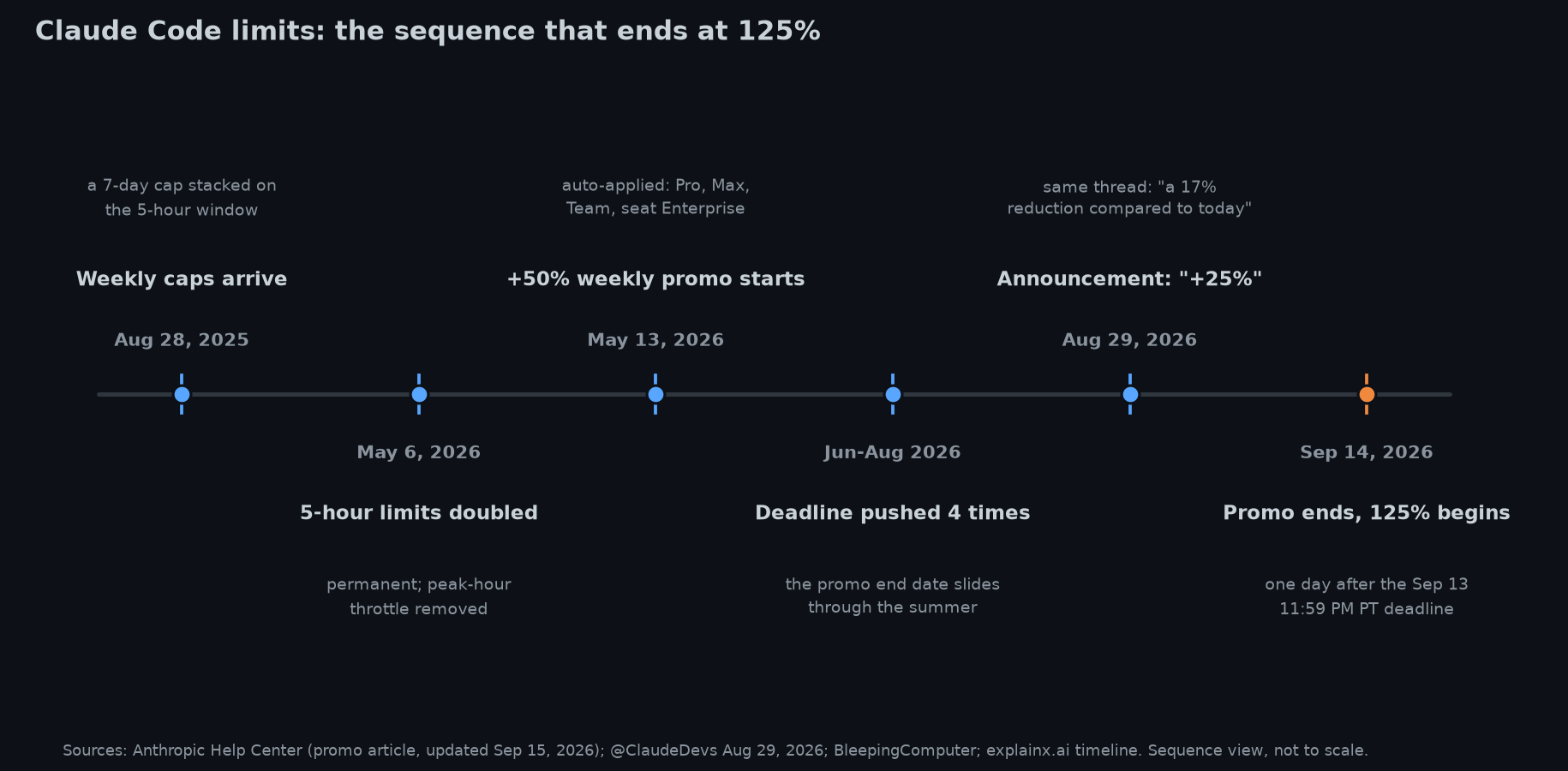
Thirteen months of limit changes, ending at 125%. The end date of the May promotion moved four times before it finally expired. (chart: OpenSource Factory; sources: Anthropic Help Center, @ClaudeDevs, BleepingComputer)
What actually changed on September 14 — and what didn't
Changed: weekly limits on Pro, Max, Team, and seat-based Enterprise plans moved to 125% of the old standard. Unchanged: the five-hour session limits, every subscription price, and the fact that Anthropic still doesn't publish absolute token or hour numbers for any of it.
The documentation lagged behind, which is a small story of its own. From the announcement until early September, Anthropic's help-center article still described the promotion's end as a "return to standard levels" — no mention of the 25%. It was rewritten this week to state the permanent change outright: weekly limits in Claude Code are now "25% higher than they were before the promotion." For two weeks, the durable documentation and the fast channel disagreed about the most important number in the story.
The practical lesson from all of that: run /usage and trust the meter — not the announcement, not the docs, and not any blog post, including this one.
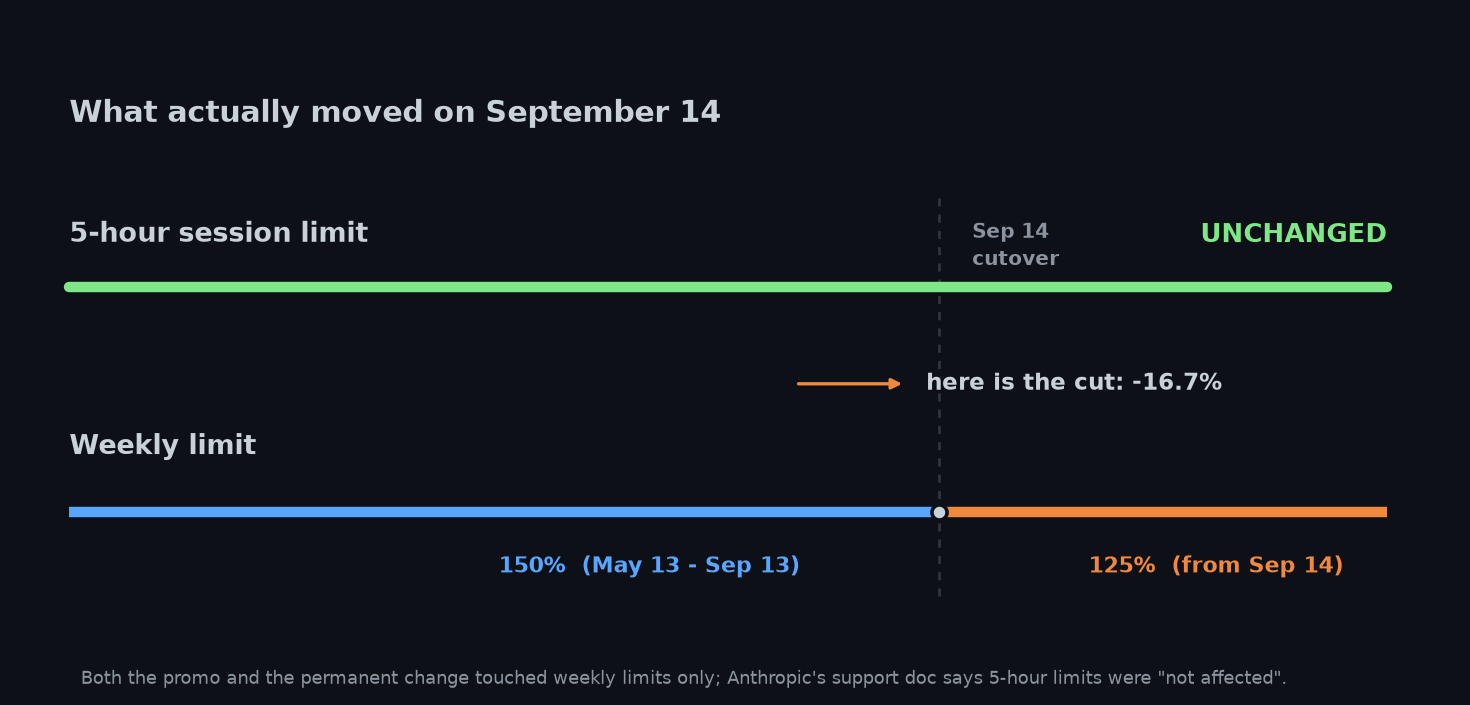
Weekly limits stepped down on September 14; the five-hour window hasn't moved since May. If a short break doesn't restore your access, you're on the weekly wall — a different problem with different fixes. (chart: OpenSource Factory; Anthropic's help center states 5-hour limits were "not affected")
Pro vs Max: what the multipliers actually mean
This is where a lot of the confusion lives, so here it is flat. Anthropic's plan labels — Max 5x, Max 20x — describe per-session (five-hour) usage relative to Pro. The weekly limit is a separate, second cap that sits on top and resets on its own weekly clock. When one of them stops you, a fresh session does nothing for the other.
| Plan | Price (monthly billing) | Session label (per 5 hours) | Weekly limit on Sep 14 |
|---|---|---|---|
| Pro | $20/mo — $17/mo on annual billing | 1x baseline | 150% → 125% (−16.7%) |
| Max 5x | $100/mo | 5x Pro per session | 150% → 125% (−16.7%) |
| Max 20x | $200/mo | 20x Pro per session | 150% → 125% (−16.7%) |
| Team | $20–25/seat (standard), $100–125/seat (premium) | seat multipliers vs Pro | same cut on the weekly pool |
| Enterprise | seat-based | per seat tier | same cut; consumption-based seats unaffected |
Prices for reference. The 5x/20x multiples are per-session, per Anthropic's plan docs; the weekly cut underneath them is the same on every tier. (source: claude.com/pricing)
As for what 125 actually buys: Anthropic has never published absolute numbers. The last hour-ranges it did publish came with the weekly-cap launch in July 2025 — roughly 40–80 Sonnet hours a week on Pro, 140–280 plus 15–35 Opus hours on Max at $100, and 240–480 plus 24–40 Opus hours at $200. Apply the multipliers and you can sketch what changed: Pro lands somewhere around 50–100 Sonnet hours a week now, Max 5x around 175–350. Treat those as directional, not promises — burn rate swings wildly with model choice, context size, and how much your sessions cache.
The gap between those labels and the weekly reality is now literally a legal question. A proposed class action filed in June in the Northern District of California (case 3:26-cv-05763) alleges the Max multipliers led buyers to expect the advertised multiples on a weekly basis; its math puts Max 5x closer to 3.5x Pro and Max 20x closer to 6x Pro per week. No class has been certified, and Anthropic declined to comment. Worth knowing when you look at the price column above.
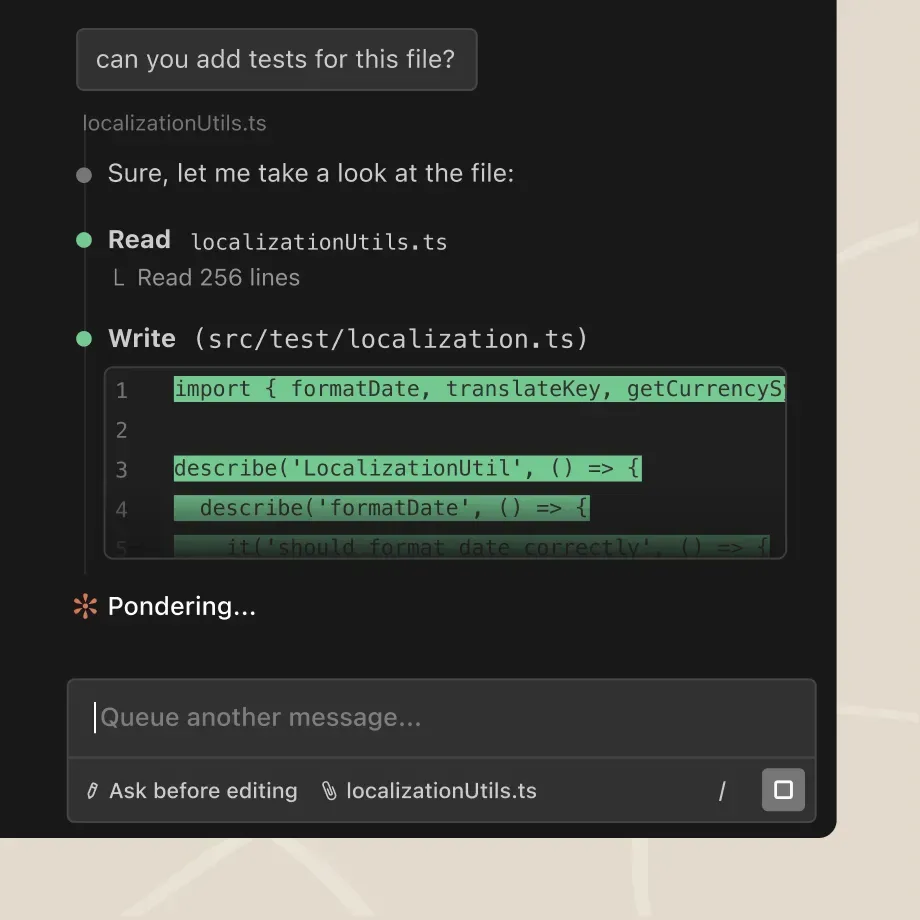
Claude Code in an editor — same tool, same weekly pool, whichever surface you use: terminal, IDE, desktop, or web. (image: Anthropic / claude.com)
See your own numbers in ten seconds
Run /usage inside Claude Code. You get a session block for the five-hour window and a plan view with your weekly meter and its reset time. That's the only reading that reflects your account's current configuration — not this post, not the docs.
Screenshot your meter once a week for a while; you'll learn your real burn rate, which is the only way to know whether 125 hurts you or is still plenty. And when you do hit a wall, check which wall it is: a session bar refills in five hours, a weekly bar doesn't care how long you wait.
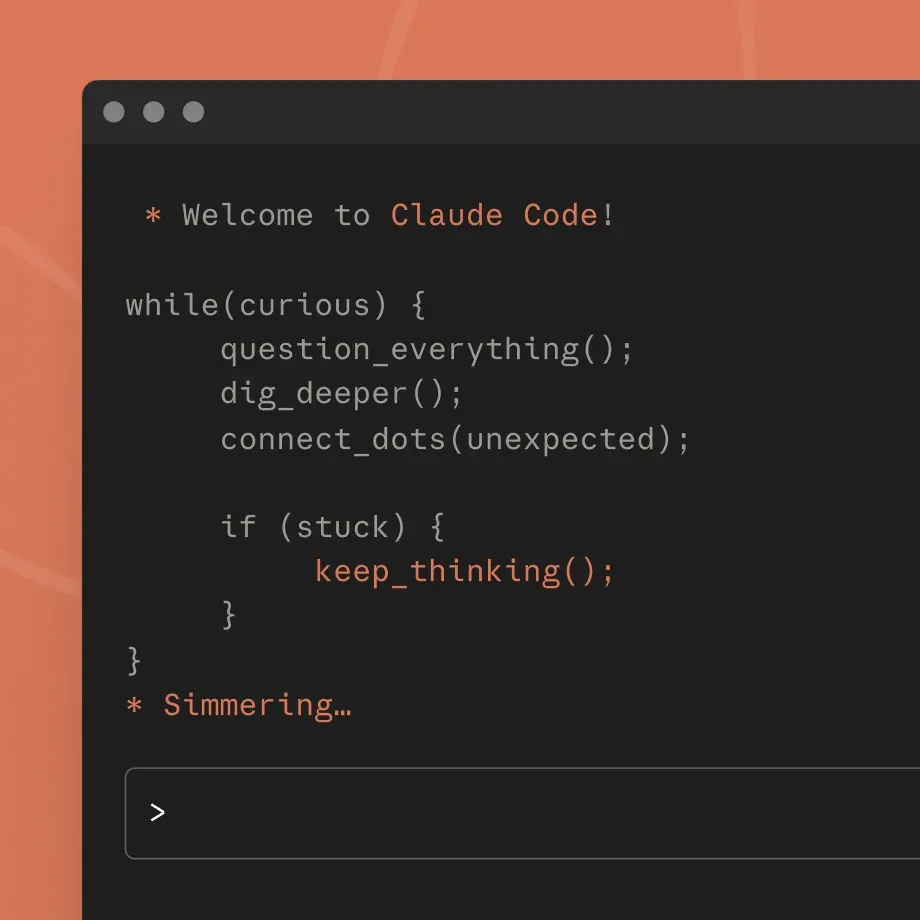
Claude Code in the terminal — /usage shows your session and weekly meters from right here. (image: Anthropic / claude.com)
What to do about it
Nothing below undoes the cut, but the weekly pool burns at very different rates depending on how you work. The first few items are official mechanics; the rest are habits the community has been sharing since August — filter them through your own meter.
- Route by task, not by habit. Sonnet and Haiku handle most routine edits at a fraction of Opus's burn. Switch with /model mid-session and keep the heavy model for architecture and gnarly debugging. Sending trivial work to the strongest model is the single biggest avoidable cost.
- Cache is the cheapest capacity you own. Agent loops re-read the same prefix every turn, and cached reads bill at a fraction of input. Anthropic cut Fable 5's cache-read price by 75% on September 1 — I did the math on that here — and long sessions benefit from a longer cache TTL if your client exposes the setting.
- Use /clear freely, /compact deliberately. Clearing between unrelated tasks is free; compacting costs tokens, because it re-reads the history it summarizes.
- Move automation off the subscription. Nightly reviews, scheduled jobs, batch runs — point those at the API (an SDK client with its own API key) or route Claude Code through Bedrock or Vertex, where usage bills per token instead of eating your weekly cap.
- Turn on usage credits. Official and one click: enable credits in Settings → Usage, and spilling past the weekly limit bills overflow at API rates instead of hard-stopping your day mid-task.
- If you're buying seats, re-run the math at 125. Teams that budgeted against the 150 summer baseline will either stall earlier in the week or buy more capacity. The community's favorite arithmetic trick — two Max 5x seats giving more total weekly headroom than one Max 20x — is worth checking against your own usage before restructuring anything.
- Keep a fallback for bounded work. Cheap-tier models are genuinely good on scoped tasks right now (the $0.75 Gemini 3.8 Flash post), and if you want a second subscription, the $10-plan comparison lives here.
One honest caveat: several of these migrate your usage rather than delete it. API overflow is real money, and the seat trick assumes you actually want to log into two accounts. The weekly cut is 17% either way — what you're managing is which bucket it lands in.
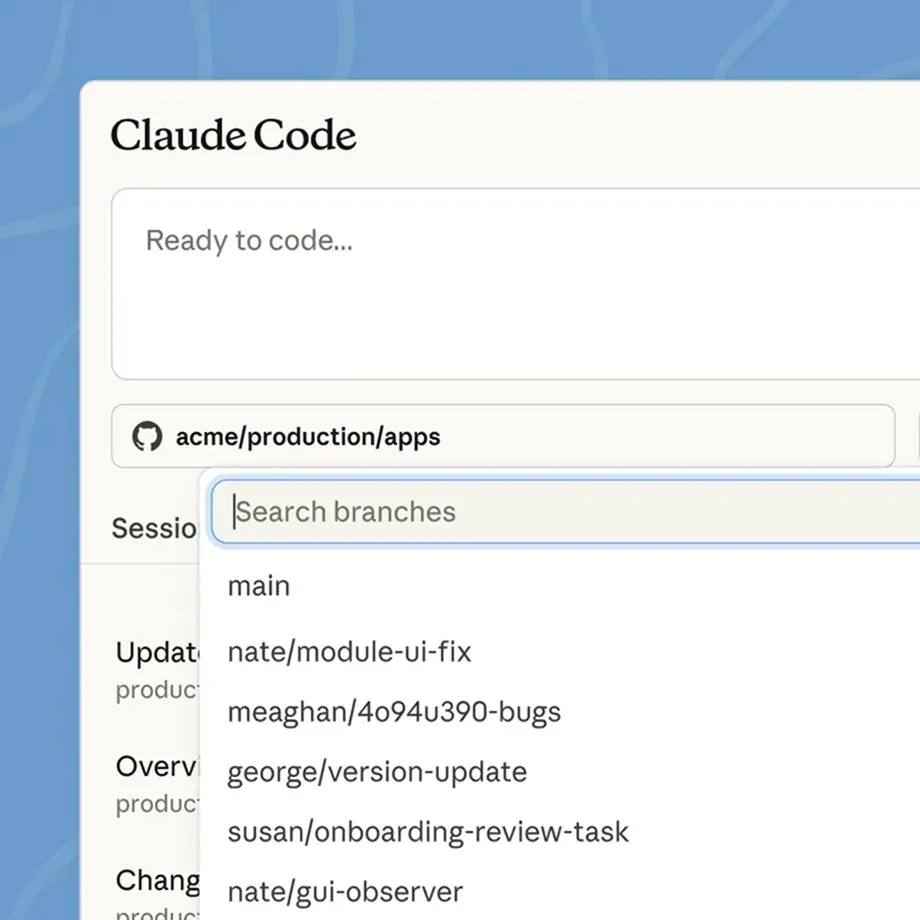
Claude Code on the web. Same weekly pool as the CLI — Anthropic's docs are explicit that the weekly level applies across CLI, IDE extensions, desktop, and web. (image: Anthropic / claude.com)
My take
The interesting part of this story isn't Anthropic being sneaky. They measured an increase against a baseline most of their users had never used, then corrected the framing within a day when it blew up — which is worth more credit than the first post deserved, and less than an apology.
The durable lesson is about reference points. A promotional level became the de facto standard over four months, which is exactly what promotions are designed to do. Every provider in this market is quietly tuning allowances under stable price tags, and this won't be the last time a percentage flatters the sender. When the next "permanent increase" lands, ask what it's an increase over. It takes five seconds and it's usually the whole story.
Anthropic says changes to usage "visibility and control" are coming — no dates, no details. When those ship, I'll run them against the same numbers and post what actually changed. If the limits move again before that, you'll read it here first.
Sources & data: Anthropic Help Center — Claude Code May–August 2026 weekly limits promotion (updated September 15, 2026) · @ClaudeDevs announcement and clarification (August 29, 2026) · BleepingComputer — Anthropic is cutting Claude Code's current weekly limits by 17% · Hacker News discussions 49491631 and 49506519 · Implicator — Anthropic Cuts Claude Code Weekly Limits 17% on Sept. 14 · Digital Applied — Claude Code's Weekly Limits Drop 17% on September 14 · claude.com/pricing · Theo (t3.gg) on X, August 2026. All percentages recomputed from the indexed levels: 125 ÷ 150 = 0.833.
OpenSource Factory — open source, AI, and the pricing games in between. Claude Code and Claude are trademarks of Anthropic; product images via claude.com, used for identification. Not affiliated with Anthropic.
Comments
Post a Comment