Googlebook: Hardware, App Compatibility and the AI Offer
HARDWARE & DESIGN
Googlebook: Hardware, App Compatibility and the AI Offer
The $899 price got my attention. The year of free AI made me open the terms.
Before valuing Googlebook's included AI year, check whether the account qualifies for it. Then ask whether the $899 hardware runs the applications you need. A subscription promotion is useful only after those more basic purchase questions have an answer.
In this article
This is a purchase analysis before the scheduled U.S. retail launch on October 4. I have checked the official specifications and terms; I have not tested a Googlebook. The useful question is what that $899 buys, and which parts of the bundle will matter once the novelty wears off.
The $899 hardware
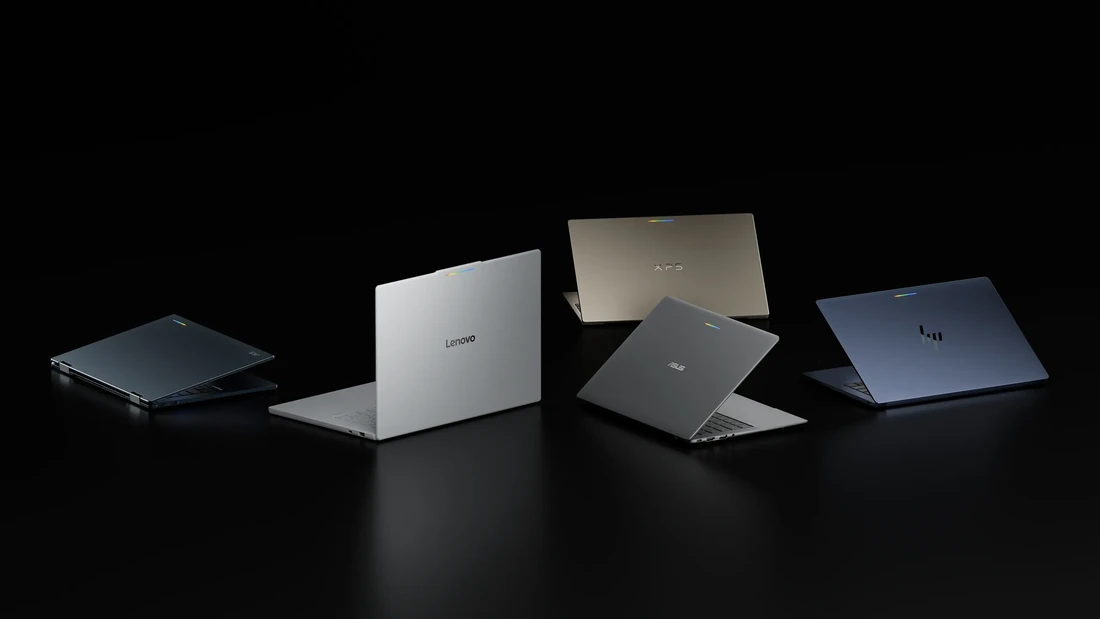
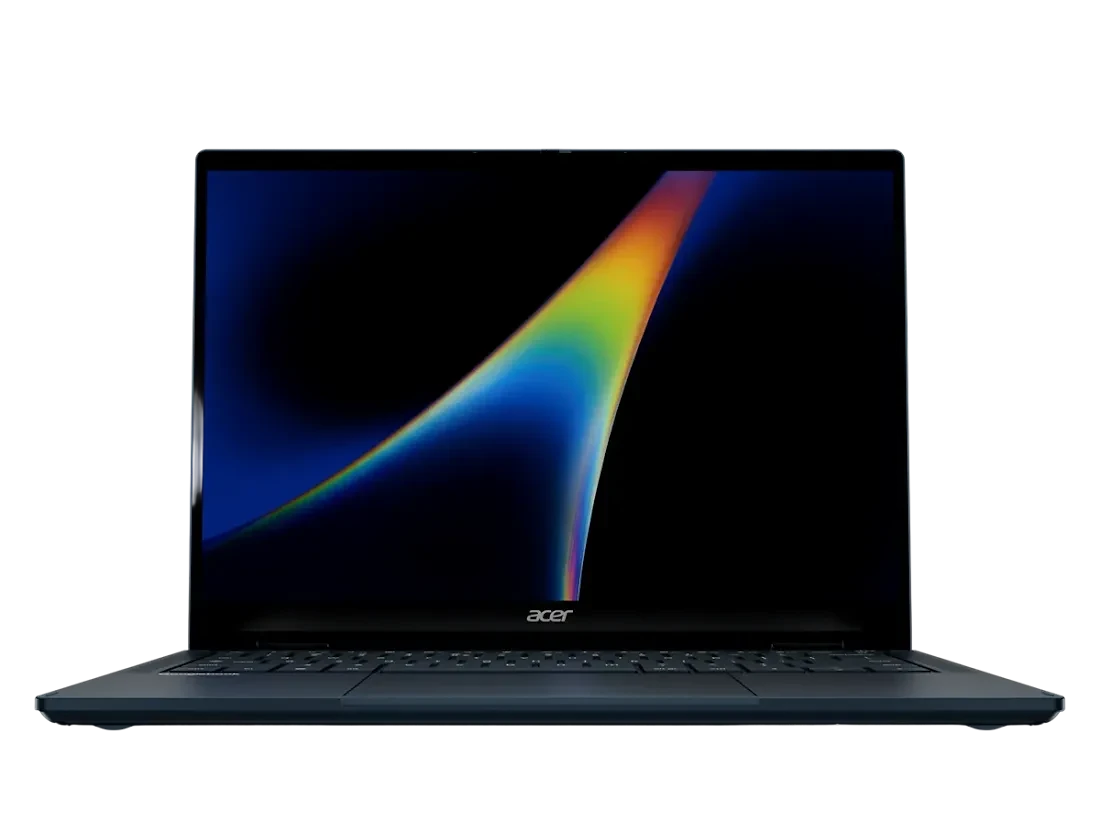
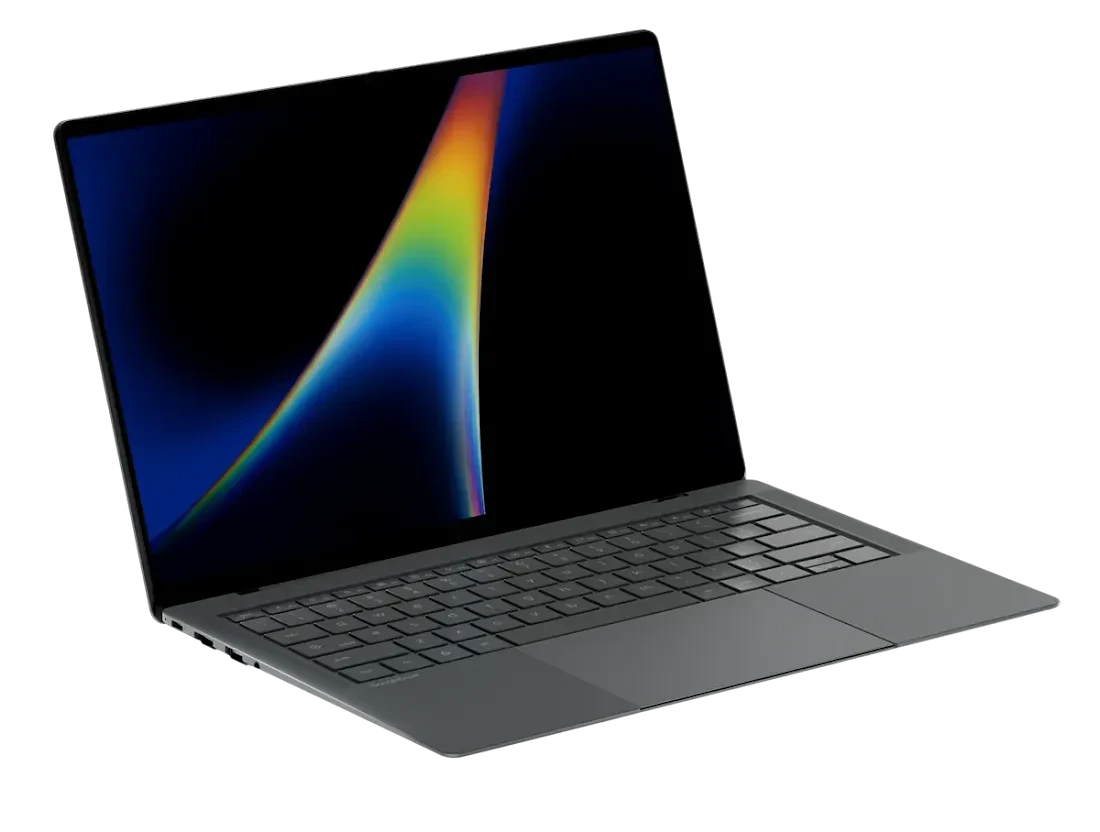
The entry model is the Acer Googlebook 14: Core Ultra 5, 16GB RAM, 512GB storage, and a 14-inch 2.8K OLED touchscreen. It is also the convertible. Those details appear together on the Acer product page, so the headline price has a specific configuration behind it.
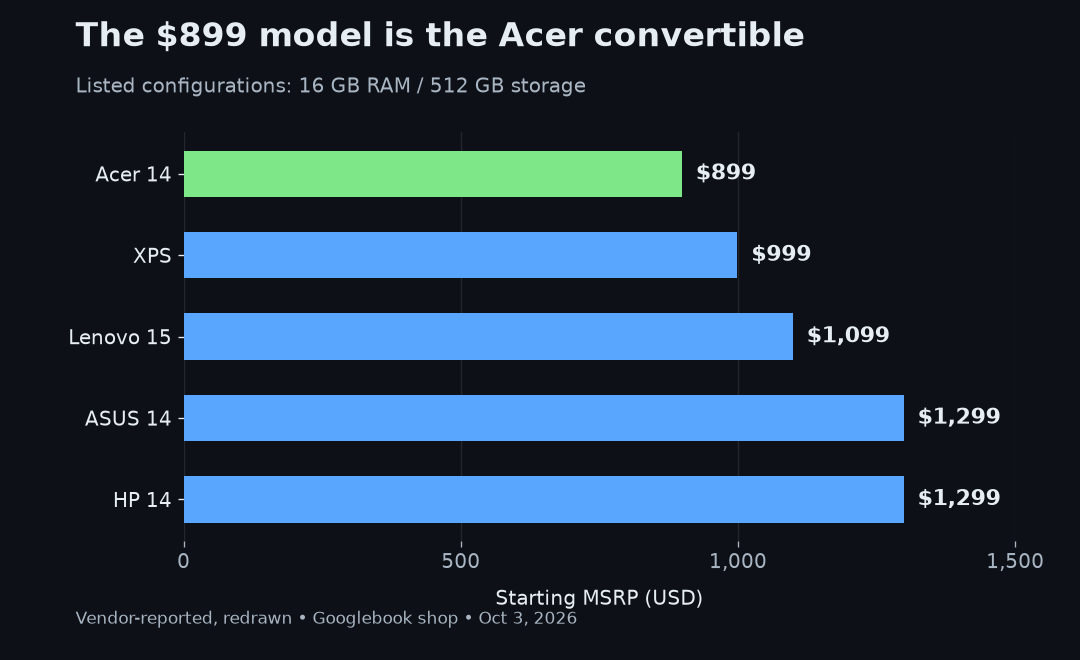
The current shop lists the same memory and storage capacity across its five displayed configurations. The price differences therefore ask a more interesting question than “how much RAM?”: which screen, chassis, processor, and shape do you want?
| Model | Starting U.S. MSRP | Processor | Shape |
|---|---|---|---|
| Acer Googlebook 14 | $899 | Core Ultra 5 | Convertible |
| XPS Googlebook | $999 | Snapdragon X Elite | Clamshell |
| Lenovo Googlebook 15 | $1,099 | Core Ultra 5 | Clamshell |
| ASUS Googlebook 14 | $1,299 | Core Ultra 5 | Clamshell |
| HP Googlebook 14 | $1,299 | Snapdragon X Elite | Clamshell |
Manufacturer-listed starting prices and configurations, checked October 3, 2026. Source: Googlebook shop. Taxes and regional pricing are separate.
A screen you enjoy, a hinge you actually use, and a keyboard that suits your work can justify a premium. A shared AI label cannot do that calculation for you. I would choose the physical laptop first, because the body and display stay with you after a promotional subscription expires.
Gemini in the interface
Google's software announcement describes Magic Pointer for asking about selected on-screen content, Rambler for turning spoken thoughts into organized text, and custom widgets made from descriptions. Antigravity and a Linux terminal environment are also part of the developer pitch.
I can see the appeal in a routine writing task. You collect a few sources, dictate a rough outline, and turn the result into a document. Reducing the copying and switching between applications could be more useful than another chatbot shortcut. That is the workflow I would want to time on a retail unit.
The test should include corrections. How often does dictation change a name? Does the pointer capture the right passage? Can you see what a background task changed? A quick demo can show a smooth path while leaving the cost of fixing mistakes out of view.
The onboard AI hardware also needs a clear boundary. An NPU rating does not establish that every Gemini feature runs offline. The official landing page specifies internet, language, and age conditions for showcased features. It also says phone integration requires setup and Android 17 or later. An Android phone alone does not establish compatibility.
Compatibility with the existing app list
Google's apps FAQ confirms Android apps through Google Play, access to phone apps, and Microsoft 365 file operations. It presents PC gaming through GeForce NOW streaming. Those are useful routes, but they answer different compatibility questions.
A familiar application name does not establish that its plugins, shortcuts, file handling, or desktop features match your current setup. A spreadsheet opening successfully is a smaller promise than your entire reporting workflow working. The same distinction applies to a creative app logo and your production files.
Before replacing a work laptop, I would bring representative files: a spreadsheet with the features you depend on, a layered image project, and a document with awkward formatting. Open, edit, export, and inspect them in the exact app version you plan to use. For a specialist Windows program, get an explicit supported route rather than infer one from the broader app list.
The terminal story deserves the same treatment. A Linux environment sounds promising for web development, but your packages, device architecture, and peripherals still have to cooperate. For large local models, my local AI machine comparison and model memory-planning article cover a different buying problem. Googlebook's AI integration does not establish the same capacity.
Eligibility for the included AI year
The offer deserves a careful read. Google's app-offer page describes 12 months of AI Pro and 5TB of storage, and says it is for new subscribers. The linked Google One terms instead spell out exclusions and discuss replacing an existing trial. They do not repeat that blanket wording.
Those descriptions do not fully reconcile. I cannot confirm from these pages that an existing AI Pro subscriber will receive the year. I also would not turn the wording mismatch into a blanket claim that every existing subscriber is excluded. Check the signed-in redemption flow before putting a value against the offer.
The country lists need attention too. Ireland is in the initial retail announcement but absent from the AI offer's eligible-country list. South Korea is absent from both cited initial lists. Buying an imported laptop does not, by itself, establish entitlement to the advertised services.
Even the advertised value differs. The shop calls the AI year $249.99; the app terms give $239.88. The latter matches $19.99 × 12. Neither amount comes off the checkout price as cash. Other app trials have their own terms, so I would not add every promotional badge together and call it guaranteed savings.
The bill after the promotion
AI Pro renews at $19.99 a month or the then-current price under the offer summary. The detailed terms say cancellation during the offer preserves membership through its end. If you exceed your later storage entitlement, new storage is restricted until you free space or buy a suitable plan.
Here is my two-year budget, using the $899 laptop and an unchanged $19.99 monthly price. The first two rows assume successful redemption. The last models someone who has no trial and chooses to pay for AI Pro throughout. I have excluded taxes, other app subscriptions, financing, and annual billing.
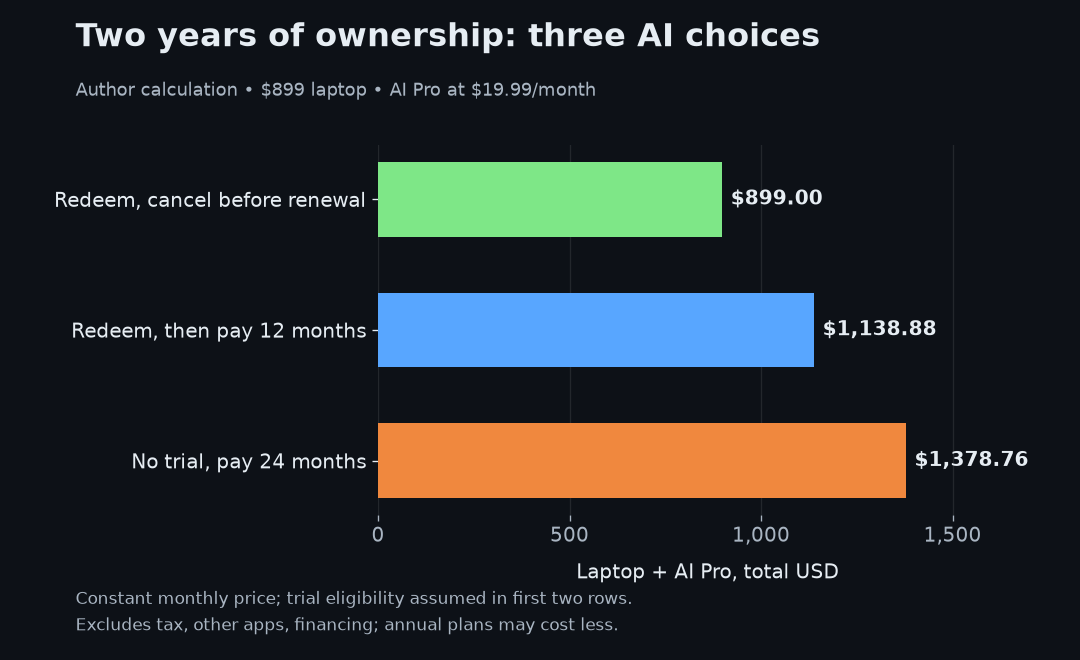
Keep AI Pro for the second year after a valid trial and the combined monthly-billing total becomes $1,138.88. Pay for it across both years and the total is $1,378.76. That difference matters, but only for a service you wanted to buy in the first place.
If you would never pay for AI Pro, the trial's cash-saving value to you is zero. You can still enjoy trying it. The useful distinction is between getting access to something and avoiding an expense you would otherwise incur. The laptop keeps working when a trial ends; the paid subscription entitlement does not continue indefinitely.
Announced retail timing
The announced retail schedule is October 4 in the U.S., then October 5 in Canada, the U.K., Ireland, France, Germany, and Australia. As of October 3, these are scheduled dates. Check your local seller for stock, warranty coverage, final pricing, and the exact configuration.
For anyone outside those markets, I would judge an import against the laptop you can buy and service locally. The lower-looking sticker can lose its advantage once delivery, taxes, and a return shipment enter the budget. I have not estimated those costs here because they depend on the buyer's route.
An Android-first, browser-heavy user has a clearer reason to consider the $899 Acer than someone dependent on unsupported desktop applications. The shared-device features need to save time in that person’s normal work. Otherwise, the comparison returns to the laptop itself.
Budget the sticker price until the offer is confirmed. Shipping-unit tests should cover app compatibility, dictation corrections, battery life and recovery after an AI mistake. Those are better buying checks than assigning a cash value to a promotional year that a particular account may not receive.
Comments
Post a Comment